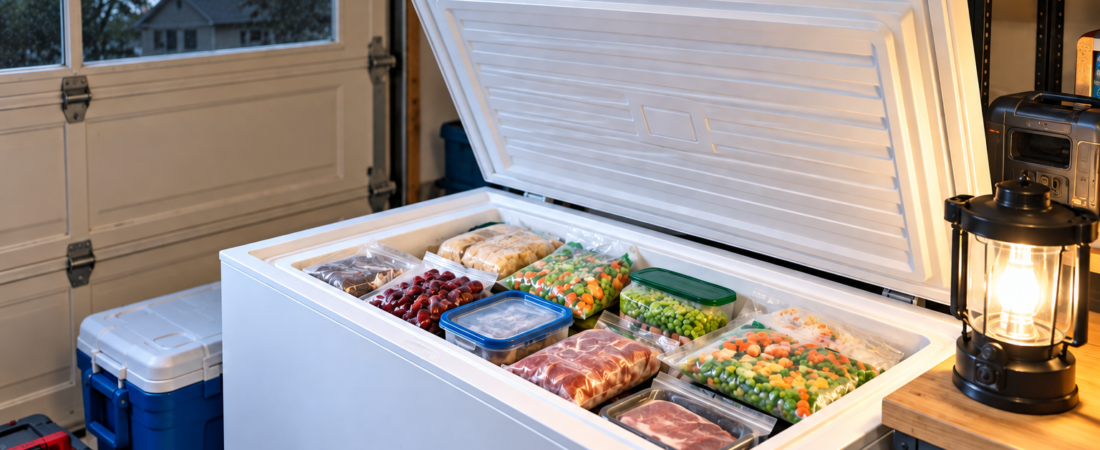
A food freezer can be one of the most useful parts of a household food supply, but frozen food has one major weakness: it depends on electricity. When the power goes out because of a storm, hurricane, winter weather, equipment failure, or another emergency, the food inside your freezer can become a concern.
Knowing what to do before, during, and after a power outage can help you protect your frozen food and avoid unnecessary waste. The most important thing is to keep the freezer closed as much as possible and understand how temperature affects food safety. A little preparation can make a significant difference when the electricity goes off.
Affiliate Disclosure: This post may contain affiliate links. I may earn a commission at no extra cost to you.
FREE 25 Foods Emergency Pantry Checklist
Building an emergency pantry is easier when you have a shopping list to follow.
Download this free printable checklist to take with you while shopping or use it to organize your pantry.
✔ 25 shelf-stable foods
✔ Printable PDF
✔ Free to download
👉 Download the FREE Emergency Pantry Checklist (PDF)
Why Freezer Preparation Matters During an Emergency
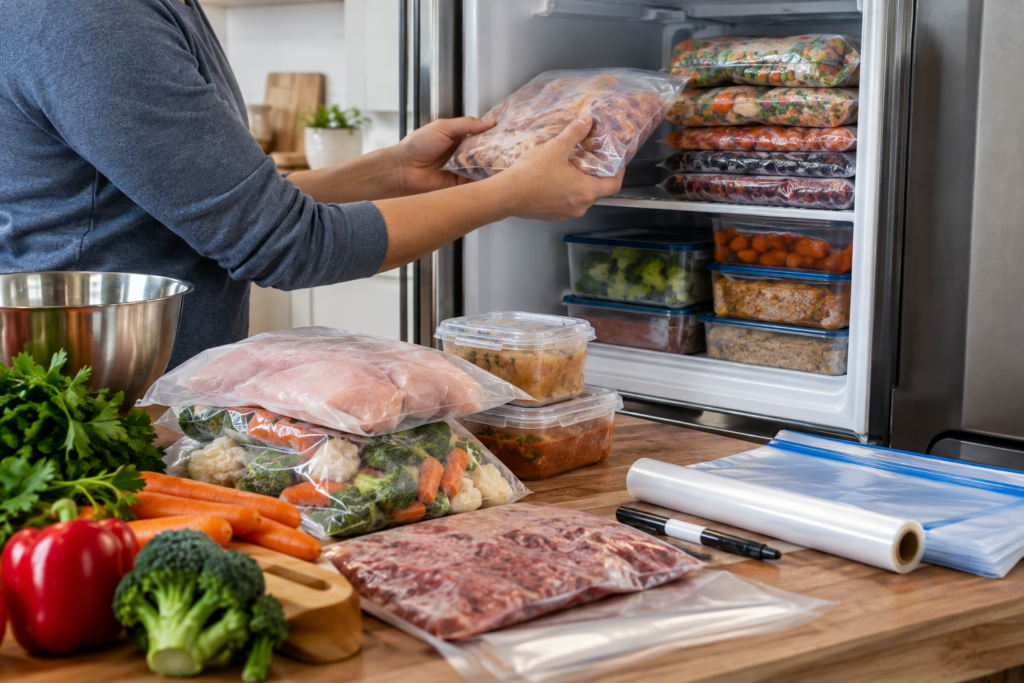
Frozen food can represent a substantial amount of money and a significant portion of your household food supply. When a freezer loses power, the temperature gradually rises, but the process is not immediate. How long food remains safely frozen depends on factors such as the freezer type, how full it is, the surrounding temperature, and how often the door is opened. Preparing in advance gives you more options when an outage occurs.
Keep Your Freezer Reasonably Full
A reasonably full freezer generally holds its cold temperature better than an almost empty one because the frozen food itself acts as thermal mass. However, do not pack the freezer so tightly that cold air cannot circulate appropriately or that food blocks vents. If your freezer is not full, properly sealed containers of water can be used to add thermal mass, provided there is enough room for safe air circulation. Always follow the appliance manufacturer’s recommendations.
Keep the Freezer Door Closed During a Power Outage
One of the simplest and most important emergency freezer tips is to avoid opening the door unnecessarily. Every time the door opens, cold air escapes and warmer air enters. If you do not know how long the outage will last, resist the temptation to repeatedly check the food. Keep the door closed and use the available information about the outage to determine your next step.
Make an Emergency Freezer Plan
Before an outage happens, decide what you would do if the power remained off for an extended period. Keep coolers, ice packs, and insulated containers available if possible. Know where your most valuable or perishable frozen foods are located. Having a plan is much easier than trying to organize everything while dealing with a storm or other emergency.
How Long Does Food Stay Frozen During a Power Outage?
A fully stocked freezer can generally remain cold for longer than a refrigerator when the door remains closed, but the exact duration varies by appliance and conditions. The U.S. Department of Agriculture advises that a full freezer can generally hold a safe temperature for about 48 hours, while a half-full freezer may maintain it for about 24 hours, assuming the door remains closed. These are general guidelines rather than guarantees, so temperature should be considered when making decisions about food safety.
Use a Freezer Thermometer
A freezer thermometer is one of the simplest tools you can add to your emergency preparation supplies. Instead of guessing how warm the freezer became, you can check the actual temperature. The FDA recommends keeping the freezer at 0°F (-18°C) or below. Knowing the temperature can help you make a more informed decision about whether frozen food can be safely kept.
What to Do With Frozen Food After a Power Outage
When electricity returns, do not automatically assume that every item needs to be thrown away. Check the freezer temperature and examine the food. Food that still contains ice crystals or has remained at 40°F or below may generally be refrozen or cooked, although quality can decline. When in doubt about a particular food, use established food-safety guidance rather than relying solely on appearance or smell.
Do Not Taste Food to Determine Whether It Is Safe
Never taste questionable food simply to see whether it is safe. Harmful bacteria may not produce an obvious odor, taste, or appearance. If you are uncertain about how long a food has been above a safe temperature, consult reliable food-safety guidance. When the safety of a food cannot be established, throwing it away is safer than taking a risk.
Use Coolers to Protect Frozen Food
If you know that an outage is likely to last for an extended period, a cooler can become an important part of your emergency food strategy. Pack frozen foods tightly with sufficient ice or frozen gel packs and minimize the number of times the cooler is opened. Keep raw meat separated from foods that are ready to eat to reduce the possibility of cross-contamination. A separate cooler for beverages can also help because it prevents repeated opening of the food cooler.
Prioritize What You Move First
If you need to transfer food from the freezer, prioritize foods that are most vulnerable to temperature changes and those you expect to use soon. Keep frozen foods together rather than spreading them among several containers without a reason. Work quickly and return the cooler to a cold environment. A simple plan can prevent unnecessary exposure to warmer temperatures.
Prepare Frozen Foods Before Severe Weather
Weather emergencies often provide some warning, giving you an opportunity to prepare your freezer. Check that the freezer door closes securely and that the appliance is operating normally. Freeze containers of water ahead of a predicted storm if you have enough freezer space. You can also prepare a cooler, ice packs, and a food thermometer so that they are immediately available.
Freeze Foods You May Need Later
Before a predicted outage, consider freezing foods you would normally refrigerate, as long as they’re appropriate for freezing. Frozen water bottles or containers can also provide additional cold storage capacity. Avoid overloading the freezer with large amounts of unfrozen food right before an outage, as it can increase the appliance’s workload. Follow safe food-handling practices when preparing foods for freezing.
Keep a Backup Food Supply That Does Not Require Electricity
A freezer should not be your only emergency food source. Shelf stable foods such as canned vegetables, canned beans, rice, pasta, oats, peanut butter, canned meats, and other pantry staples can provide alternatives when electricity is unavailable. Having foods that can be eaten with little or no cooking can be particularly valuable during longer outages. A balanced emergency food plan should include both frozen foods and shelf-stable foods.
Stock Foods You Already Eat
When creating an emergency pantry, focus on foods your household is familiar with. There is little benefit to storing large quantities of foods nobody wants to eat. Build gradually and rotate the supplies into everyday meals. This approach keeps your emergency food supply practical while reducing waste.
Protect Your Freezer From Future Problems
Regular freezer maintenance can help prevent problems before an emergency occurs. Check door seals for damage, keep the appliance clean, and avoid blocking vents. Keep an inventory of major frozen foods so you know what is inside without leaving the door open while searching. If the freezer begins making unusual noises or has difficulty maintaining temperature, address the problem before a power outage turns it into a larger issue.
Recommended Resource: The Lost Super Foods
If you’re building a long-term emergency food supply, it’s worth learning about the foods our grandparents and earlier generations relied on before modern refrigeration and grocery stores became common.
The Lost Super Foods is a guide that explores forgotten preservation methods, shelf-stable foods, and traditional survival recipes that helped families thrive during difficult times. The guide includes practical information on food storage, preservation techniques, and nutrient-dense foods that can complement a well-stocked emergency pantry.
Whether you’re just starting your preparedness journey or looking to expand your food storage knowledge, this resource may provide valuable insights for creating a more resilient pantry.
👉 Click here to learn more about The Lost Super Foods.
Final Thoughts on Emergency Food Freezer Tips
Your freezer can be an important part of your emergency food supply, but it needs to be protected during power outages. Keep the door closed, use a freezer thermometer, prepare coolers and ice packs ahead of severe weather, and understand the temperature conditions that affect food safety. Most importantly, maintain a shelf-stable backup supply so your household is not completely dependent on electricity. A little preparation before an emergency can save food, money, and unnecessary stress afterward.
Related Articles
The guides below will help ensure you create a strong emergency pantry:
How To Make Sure Your Food Pantry Is Secure