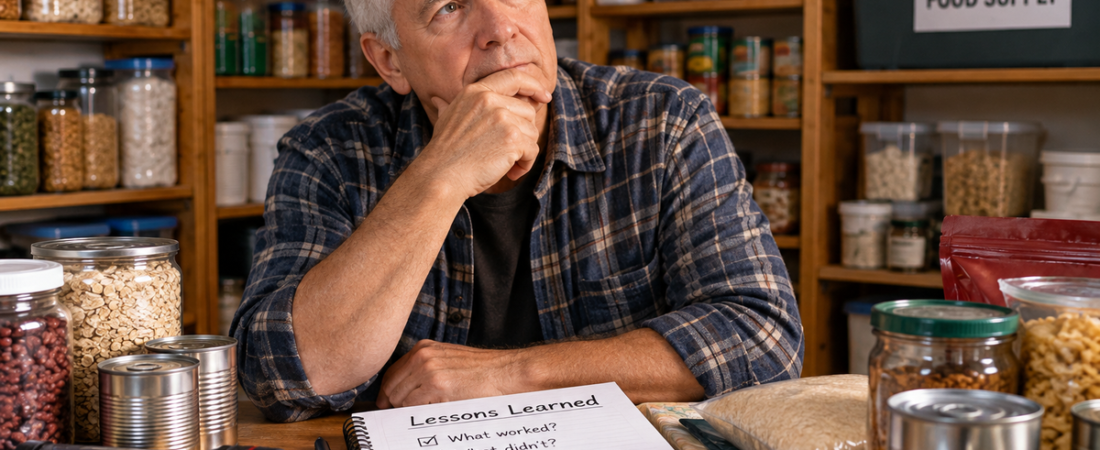
The power went out, and suddenly your carefully planned emergency food supply became much more important than it had seemed sitting on the pantry shelves. At first, you expected the electricity to return within a few hours, so you didn’t worry too much. But as the hours passed, dinner time arrived, the electric stove wouldn’t work, the microwave was useless, and you started looking at your food differently. You may have had plenty of food, but did you have the right food?
Affiliate Disclosure: This post may contain affiliate links. I may earn a commission at no extra cost to you.
Maybe you’ve experienced something similar during a winter storm, hurricane, extended power outage, or another situation that disrupted your normal grocery routine. Perhaps you discovered that most of your stored food required cooking, your family didn’t want to eat some of the foods you’d purchased, or you didn’t have enough water to prepare what you had.
Those experiences can be frustrating, but they can also be incredibly valuable.
Once you’ve actually had to depend on your emergency food supply, you know things about it that no shopping list can tell you. You know what your family ate first, what they refused to eat, what ran out, what was difficult to prepare, and what you wished you’d had.
Instead of simply replacing the food you used, take some time to look back at what happened. Your experience can show you exactly where your emergency pantry worked—and where it needs improvement.
You don’t need to start over. You simply need to learn from the last experience and make the next food supply better.
FREE 25 Foods Emergency Pantry Checklist
Building an emergency pantry is easier with a shopping list to follow.
Download this free printable checklist to take with you while shopping or use it to organize your pantry.
✔ 25 shelf-stable foods
✔ Printable PDF
✔ Free to download
👉 Download the FREE Emergency Pantry Checklist (PDF)
Start With What Actually Happened
Before buying anything else, think back to the last time your normal food supply was disrupted.
How long were you without normal grocery access? What did your family eat first? Which foods disappeared quickly, and which ones were ignored? Did you have enough water? Could you prepare meals without electricity? Did you have the equipment you needed?
Also think about what you wished you had.
That question may be the most useful of all.
Your answers tell you what your household actually needs, rather than what a generic preparedness list says you need.
1. Stock Food Your Family Will Actually Eat

One of the biggest mistakes people make is buying emergency food based entirely on shelf life, price, or convenience.
A food can last for years and still be a poor choice if nobody in your household wants to eat it.
Look at the foods your family normally enjoys. If everyone eats pasta, peanut butter, cereal, canned soup, tuna, rice, or certain snacks, find shelf-stable versions of those foods and build around them.
You don’t have to turn your emergency food supply pantry into a collection of comfort foods. The goal is to combine practical staples with familiar foods that make meals easier for your family to accept.
A Short Story: The Food Nobody Wanted
One family of four stocked up on beans, canned vegetables, rice, oatmeal, and other inexpensive staples. Their pantry looked impressive, but after relying on it for several days, the children were tired of the same meals and wanted their usual foods.
The parents realized they had planned around what was practical to store rather than what their family would actually eat. When they rebuilt their supply, they kept the staples but added familiar breakfasts, snacks, canned meats, fruit, and crackers.
The lesson was simple: an emergency food supply needs to fit the people eating it.
2. Think in Meals, Not Just Containers
Another common problem is having plenty of food but not enough actual meals.
You might have cans of beans, vegetables, tuna, several bags of rice, and a container of oats. On paper, that sounds like a well-stocked pantry. But what can you actually make?
Try looking at your supply from a meal-planning perspective.
Rice, beans, and vegetables can become one meal. Tuna, crackers, and fruit can become another. Oats, shelf-stable milk, and dried fruit can provide breakfast. Peanut butter, crackers, and dried fruit can become a quick lunch or snack.
This approach also helps identify foods that take up space without contributing much to your overall meal plan.
Ask yourself:
“How many different meals can my family make from the food we have?”
If the answer is only a handful, you may need more variety or a few additional ingredients.
Make Room for No-Cook Foods
Your menu also needs to account for situations where cooking isn’t possible.
An electric stove, microwave, air fryer, toaster oven, or electric pressure cooker won’t help if the power isn’t available.
Keep a selection of foods that can be eaten without cooking, such as:
- Peanut butter
- Crackers
- Nuts
- Dried fruit
- Canned meats
- Canned beans
- Canned fruit
- Ready-to-eat meals
- Granola bars
- Shelf-stable beverages
You can still store rice, pasta, dry beans, and other foods that require cooking. Just make sure your pantry has enough food that can be eaten immediately.
3. Don’t Forget Water and the Equipment Needed to Use Your Food
Food and water are closely connected. If your supply contains rice, pasta, dry beans, or dehydrated foods, you’ll need water to prepare them.
A commonly used emergency-planning guideline is at least one gallon of water per person per day for drinking and sanitation, although actual needs vary depending on circumstances.
Think about your last experience. Did you have enough water for drinking and food preparation? If not, gradually increase your supply.
Then look at the equipment you needed.
A Short Story: The Can Opener Problem
Another household had plenty of canned food but almost no way to open it when their usual electric can opener became useless.
They eventually found a manual opener in a kitchen drawer, but the experience exposed an easily overlooked problem: having emergency food isn’t enough if you can’t access it.
Afterward, they kept a manual can opener with their emergency supplies and reviewed the other equipment they might need.
Food preparation includes more than food.
Check that you have the basic equipment needed to use your supplies, including:
- A manual can opener
- Eating utensils
- Containers
- A safe way to heat food
- Appropriate cooking equipment
- A way to store opened food
- Lighting near your food-storage area
Food sitting on a shelf isn’t much help if you can’t access or prepare it.
4. Build Variety and Rotate What You Store
Eating the same meal repeatedly may be manageable for a day or two, but variety becomes more important as the days continue.
Look at the foods your family became tired of and consider whether you can use them in different ways. Beans, for example, can be combined with different vegetables, seasonings, sauces, rice, or tortillas.
A few familiar seasonings can also make basic foods more enjoyable. Salt, pepper, hot sauce, salsa, soy sauce, mustard, and seasoning blends can provide inexpensive variety.
Use Your Emergency Food Regularly
Your emergency supply shouldn’t necessarily sit untouched for years.
A simple first-in, first-out system helps prevent forgotten food from accumulating. Put newer products behind older ones and use the older items first.
This also gives your family a chance to try foods before you need them. If nobody likes a particular product, you’ll discover that while you still have time to replace it.
Inspect your supplies periodically for damaged cans, bulging containers, leaking packages, pest damage, moisture, or other signs of deterioration. Follow the manufacturer’s storage instructions and use appropriate food-safety practices.
5. Make Your Supply Match Your Real Situation
Not every household has the same preparedness needs.
Think about what actually happened to you and what caused the greatest difficulty.
If cooking was the problem, increase your supply of no-cook foods and review your options for safely preparing hot meals.
If you needed to leave home, portability may deserve more attention.
If normal shopping wasn’t possible for several days, you may want to increase the amount of food you keep on hand.
Your storage goal may also need to change.
Maybe you planned for three days but needed five. Instead of jumping immediately to a huge stockpile, increase your target gradually:
3 days → 7 days → 14 days → 30 days
Each stage gives you another opportunity to evaluate your budget, storage space, water supply, and family’s needs.
6. Test Your Emergency Food Supply Before You Need It
Perhaps the most useful thing you can do is test your plan.
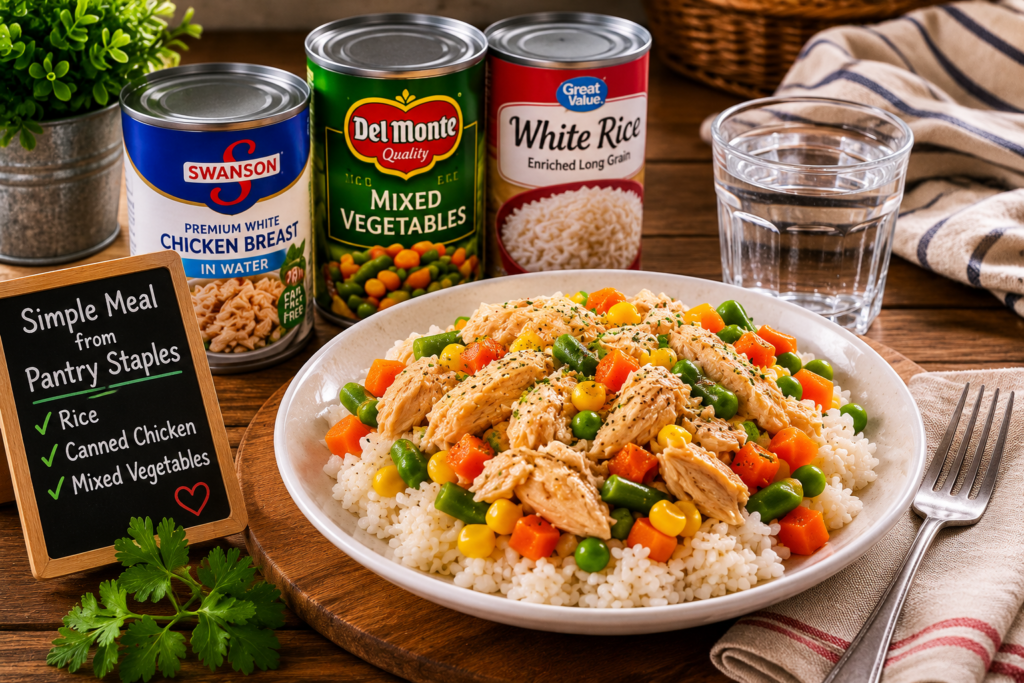
Choose a weekend and pretend your normal food isn’t available. Use only the foods you’ve designated as emergency supplies and try making breakfast, lunch, and dinner.
The purpose isn’t to recreate a disaster.
It’s to discover what works and what doesn’t.
A Short Story: The Weekend Test
One couple decided to test their emergency pantry before they actually needed it. They used only their stored food for a weekend and quickly discovered that several planned meals required ingredients they hadn’t stored. They also had very few foods that could be eaten without cooking.
Instead of treating the test as a failure, they used it to improve their supply. They added no-cook foods, adjusted their shopping list, and reorganized the pantry.
A practice run can reveal problems while there’s still time to fix them.
Use the Keep, Change, Add Method
After your test, make three simple lists.
Keep: What worked well?
Change: What caused problems?
Add: What was missing?
Maybe your canned chicken was useful, but your family didn’t like one particular soup. Perhaps you had enough food but not enough water. Maybe you needed more snacks, seasonings, or no-cook meals.
Use those discoveries to guide your next grocery trip instead of simply buying more of everything.
Your Last Emergency Was a Test—Use the Results
An emergency food supply isn’t a one-time project. It should evolve as you learn more about your household.
Every real-world experience or practice exercise gives you useful information.
Maybe you learned that your family needs more variety. Perhaps you discovered that you need more no-cook meals. Maybe water was the real limitation, or you had plenty of food but couldn’t turn it into satisfying meals.
Whatever the lesson was, use it.
The goal isn’t to build the biggest possible stockpile.
It’s to build an emergency food supply that becomes more useful every time you learn something new.
Recommended Resource: The Lost Super Foods
If you’re building a long-term emergency food supply, it’s worth learning about the foods our grandparents and earlier generations relied on before modern refrigeration and grocery stores became common.
The Lost Super Foods: This guide explores forgotten preservation methods, shelf-stable foods, and traditional survival recipes that helped families thrive during difficult times. The guide includes practical information on food storage, preservation techniques, and nutrient-dense foods that can complement a well-stocked emergency pantry.
Whether you’re just starting your preparedness journey or looking to expand your food storage knowledge, this resource may provide valuable insights for creating a more resilient pantry.
👉 Click here to learn more about The Lost Super Foods.
Final Thoughts
If you’ve already been through an event that affected your normal food supply, you have something valuable: experience.
You know what happened, what you used, what you ran out of, and what you wished you’d had.
Don’t waste that experience.
Write down the lessons while you still remember them. Fix the biggest gaps first, then gradually improve the rest of your emergency pantry.
The best emergency food plan isn’t necessarily the one with the most food.
It’s the one that has been tested, adjusted, and built around the real needs of your family.
Ready to Check Your Pantry?
If your last experience exposed gaps in your food supply, now is a good time to fix them.
Get the FREE Emergency Pantry Checklist: 10 Survival Foods That Can Last for Years.
Enter your email below, and we’ll send the checklist directly to your inbox. Use it as a starting point to identify what your pantry may be missing and build your emergency food supply one step at a time.
Start with what you can afford today. Fix the biggest gaps first, then keep improving your pantry as you learn what works best for your household.
Related Articles
Want to build a stronger emergency pantry? These guides will help:
What’s To Store In Your Pantry For A Long-Term Emergency?