Affiliate Disclosure: This post may contain affiliate links. I may earn a commission at no extra cost to you.
Emergency food supply pantries are one of the smartest ways to prepare for unexpected situations. Whether you’re preparing for natural disasters, job loss, supply chain disruptions, or severe weather, having food stored away provides peace of mind.
However, one of the biggest mistakes beginners make is buying a large stockpile of food and forgetting about it for years. Expired cans, stale grains, spoiled ingredients, and wasted money are often the result.
Fortunately, there’s a much better approach.
By learning how to rotate your emergency food supply, you can always keep fresh food on hand while minimizing waste and saving money. Food rotation is simple, doesn’t require expensive equipment, and can become part of your normal grocery routine.
In this guide, you’ll learn exactly how to rotate your emergency pantry efficiently, organize your storage, track expiration dates, and build a long-lasting food reserve that stays fresh year after year.
Why Food Rotation Matters
Every food item has a shelf life.
Even foods known to last for many years eventually begin to lose flavor, texture, nutritional value, or safety. While many canned foods remain safe beyond their printed “Best By” date when stored properly, quality slowly declines over time.
Without a rotation system, you may experience:
- Expired canned goods
- Stale flour and grains
- Rancid cooking oils
- Wasted money
- Empty pantry gaps when replacing everything at once
A proper rotation system prevents all of these problems.
Instead of throwing away old food every few years, you’re constantly replacing what you use with fresh products.
Think of your emergency pantry as an extension of your kitchen—not a forgotten storage closet.
The First In, First Out (FIFO) Method
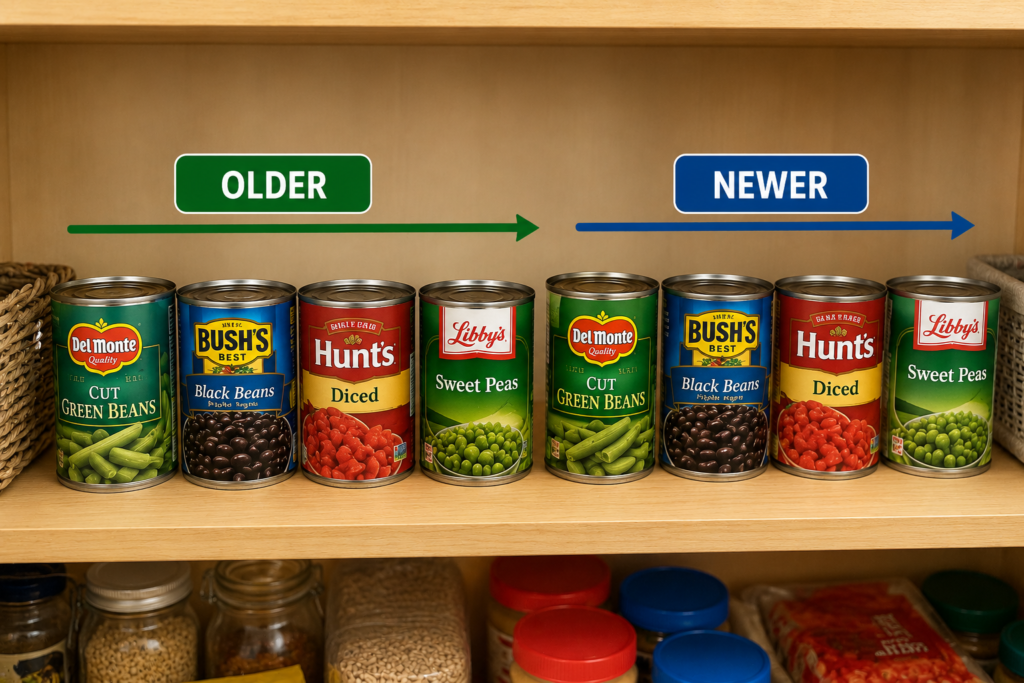
The easiest system used by restaurants, grocery stores, and emergency preparedness experts is called FIFO:
First In, First Out.
The oldest food gets used first.
New purchases always go behind the older items.
For example:
- Buy six cans of green beans.
- Place the new cans behind the older cans.
- When cooking dinner, grab the front can first.
- Replace it during your next grocery trip.
This simple habit keeps your pantry continuously refreshed.
Store What You Actually Eat
One of the biggest reasons food gets wasted is buying foods your family never normally eats.
Instead, stock foods already used in everyday meals.
Examples include:
- Canned vegetables
- Peanut butter
- Pasta
- Rice
- Beans
- Oatmeal
- Canned chicken
- Tuna
- Tomato sauce
- Soups
- Crackers
- Instant potatoes
When these foods become part of your weekly cooking routine, rotation happens naturally.
If nobody likes canned spinach, don’t buy two dozen cans just because they were on sale.
Build a Working Pantry
Many preparedness experts recommend creating a “working pantry.”
This means every item in storage is also part of your everyday kitchen.
Instead of separating “emergency food” from “normal food,” combine them.
For example:
Kitchen Shelf
- Rice
- Pasta
- Canned vegetables
- Soup
Emergency Shelf
- Extra rice
- Extra pasta
- Extra canned vegetables
- Extra soup
As you remove food from the kitchen shelf, replace it from your storage shelf.
Then replenish storage during your next shopping trip.
This creates continuous rotation without much effort.
Label Everything
Labels make rotation much easier.
Use a permanent marker to write:
- Purchase date
- Best By date
- Month and year
Example:
Purchased:
April 2026
Best By:
September 2029
Even if labels become difficult to read later, your markings remain visible.
Organize by Food Categories

Keeping similar foods together saves time and prevents forgotten items.
Good pantry sections include:
Vegetables
- Corn
- Green beans
- Peas
- Carrots
- Mixed vegetables
Proteins
- Tuna
- Chicken
- Salmon
- Spam
- Chili
- Beef stew
Fruits
- Peaches
- Pears
- Pineapple
- Applesauce
Baking
- Flour
- Sugar
- Baking powder
- Baking soda
- Yeast
Grains
- Rice
- Pasta
- Oats
- Quinoa
When shelves stay organized, you’ll immediately notice which foods need replenishing.
Create a Pantry Inventory
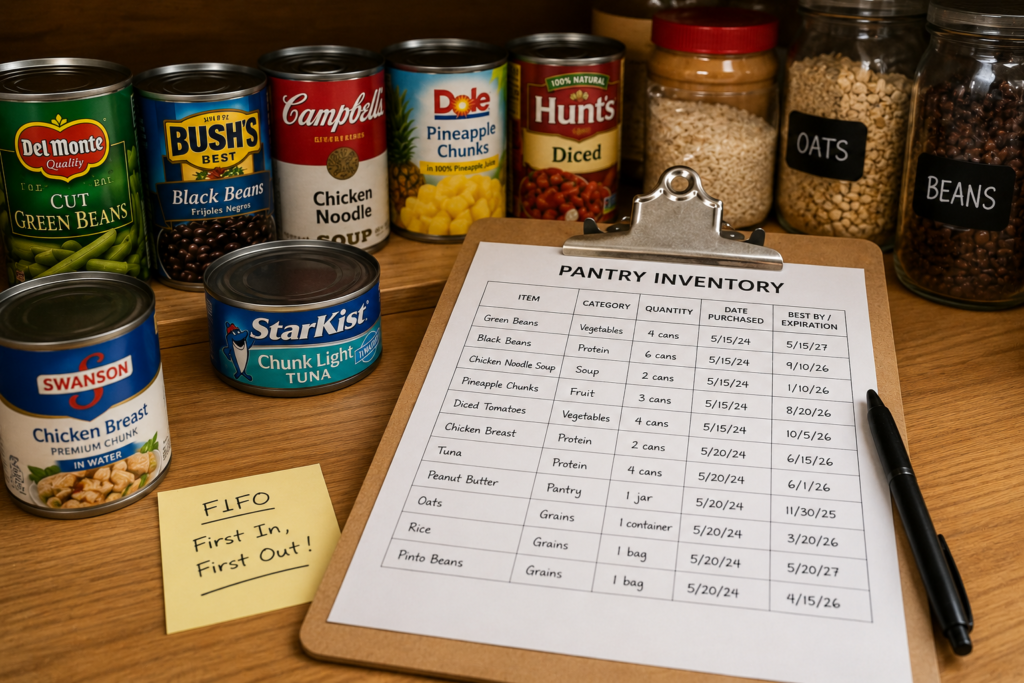
Many people don’t realize how much food they already own.
An inventory sheet solves this problem.
Track:
- Item
- Quantity
- Purchase date
- Expiration date
- Storage location
Example:
Rice — 20 lbs
Purchased:
May 2026
Expires:
May 2031
Location:
Basement Shelf B
Updating your inventory once a month only takes a few minutes.
Check Expiration Dates Every Few Months
Rather than waiting until food expires, schedule regular inspections.
Every three to six months:
- Look for damaged cans
- Remove dented containers
- Check packaging
- Inspect grains for pests
- Replace old oils
- Verify expiration dates
A quick inspection helps catch problems early.
Understand Best By vs. Expiration Dates
Many people throw away perfectly good food because they misunderstand food labels.
“Best By” generally refers to quality, not safety.
Many canned foods remain safe beyond the printed date when stored correctly.
However, never consume food if:
- The can is bulging
- The lid is leaking
- Rust has created holes
- The food smells unusual
- Mold is present
- Packaging has been compromised
When in doubt, throw it out.
Store Food Properly
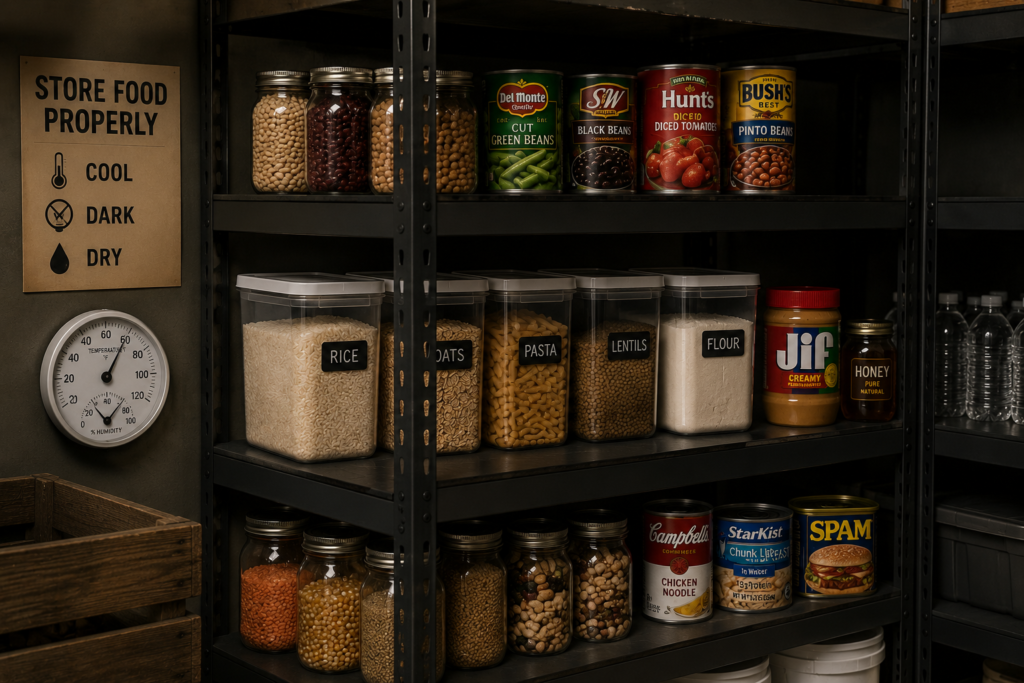
Proper storage dramatically extends shelf life.
Aim for:
- Cool temperatures
- Dry conditions
- Low humidity
- Minimal sunlight
- Stable temperatures
Avoid storing food near:
- Water heaters
- Furnaces
- Windows
- Garages with extreme temperatures
- Damp basements
The better your storage conditions, the longer your food will maintain its quality.
Rotate Bulk Foods
Large quantities of grains deserve special attention.
Foods such as:
- Rice
- Wheat berries
- Oats
- Beans
can last for many years when stored correctly.
Once opened, divide bulk purchases into smaller airtight containers for daily use while keeping the remaining supply sealed.
This minimizes moisture exposure.
Replace Items During Normal Shopping
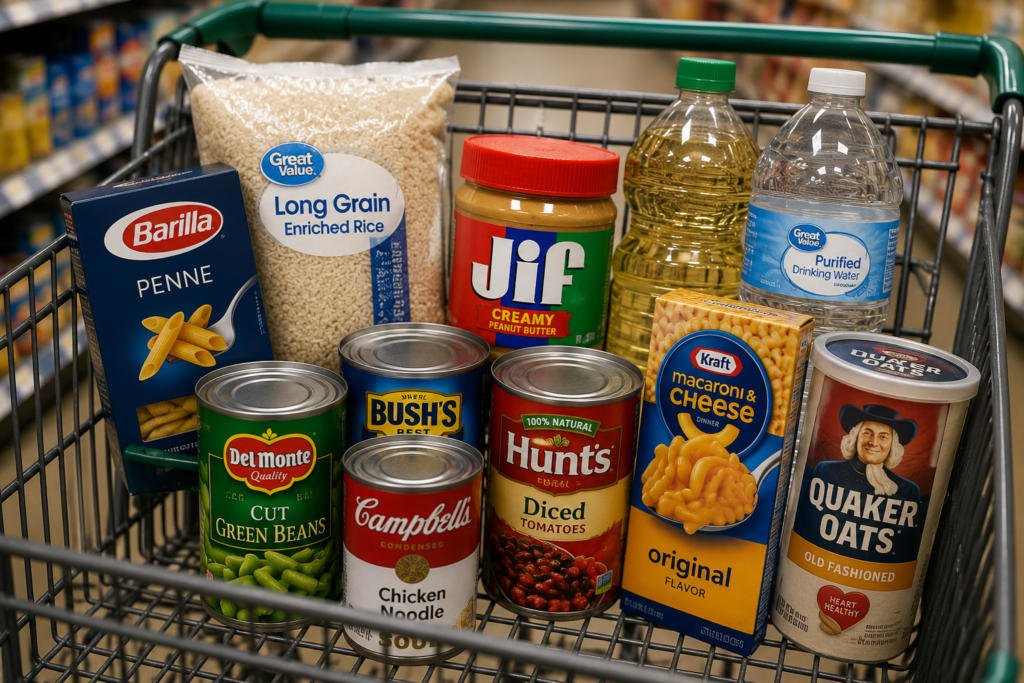
One of the easiest habits is replacing what you use immediately.
For example:
Monday:
Use one can of soup.
Saturday grocery trip:
Buy one new can of soup.
Simple.
Your pantry stays full without needing large replacement purchases.
Watch Seasonal Sales
Food rotation doesn’t have to be expensive.
Purchase extra pantry foods during:
- Holiday grocery sales
- Warehouse club promotions
- Buy-one-get-one offers
- Coupon events
Stocking up during sales allows you to rotate fresh inventory while reducing your grocery bill.
Don’t Forget Water
Food rotation also applies to water.
Commercial bottled water generally has long shelf lives, but inspect bottles periodically for damage.
If storing your own water:
- Rotate every 6–12 months
- Clean containers before refilling
- Store away from chemicals and sunlight
Water is just as important as food during emergencies.
Rotate Cooking Supplies
Emergency cooking ingredients deserve attention too.
Check:
- Vegetable oil
- Olive oil
- Shortening
- Powdered milk
- Dry yeast
- Seasonings
- Honey
- Salt
- Sugar
Some ingredients last much longer than others, so knowing their expected shelf life helps reduce waste.
Practice Using Your Emergency Foods
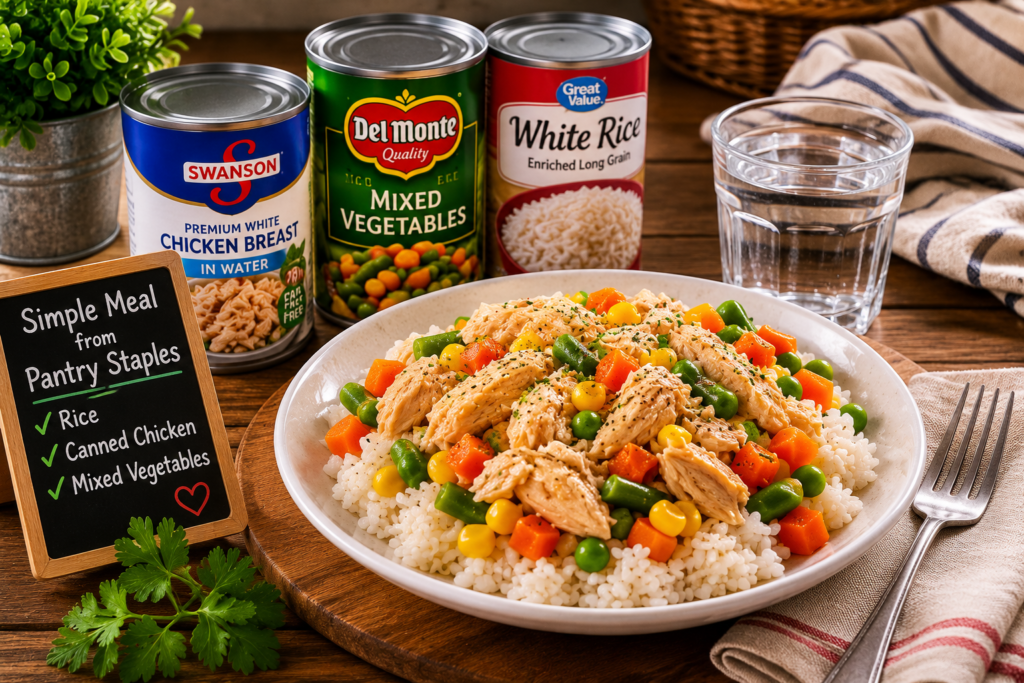
Don’t wait for an emergency to discover you dislike certain foods.
Occasionally, prepare meals using only pantry ingredients.
For example:
Breakfast
- Oatmeal
- Powdered milk
- Honey
Lunch
- Vegetable soup
- Crackers
Dinner
- Rice
- Canned chicken
- Mixed vegetables
These practice meals reveal which foods your family enjoys and which items you should replace with better options.
Common Rotation Mistakes
Avoid these common errors:
Buying Too Much at Once
Large purchases often expire before being used.
Build gradually instead.
Ignoring Expiration Dates
Check your shelves regularly.
Storing Food in Hot Areas
Heat shortens shelf life considerably.
Forgetting About Hidden Shelves
Inventory prevents food from disappearing into the back of storage areas.
Buying Unfamiliar Foods
Stick with foods your family already eats.
How Often Should You Rotate?
A simple schedule works well for most households.
Weekly
- Replace used pantry items during grocery shopping.
Monthly
- Update inventory.
- Organize shelves.
Every 3–6 Months
- Check expiration dates.
- Inspect packaging.
- Clean pantry shelves.
Yearly
- Review your overall emergency food plan.
- Donate unopened items you won’t use.
- Replace aging products.
Following this schedule keeps your emergency food supply fresh without becoming overwhelming.
Before deciding where to store your supplies, make sure you’re stocking the longest-lasting pantry foods that can remain usable for years.
Final Thoughts
Rotating your emergency food supply isn’t complicated. In fact, it’s one of the easiest habits you can develop once your pantry is organized.
The key is to treat your emergency storage as part of your everyday kitchen rather than something hidden away for years. Use the oldest items first, replace them during your regular grocery trips, and inspect your supplies a few times each year.
By following the simple strategies in this guide—using the First In, First Out method, organizing your shelves, tracking inventory, and storing foods properly—you’ll waste less food, save money, and always have a dependable supply ready when you need it most.
Preparedness isn’t about buying the biggest stockpile. It’s about maintaining a reliable pantry that stays fresh, practical, and ready for whatever life brings.
Want to build a stronger emergency pantry? These guides will help:
Emergency Foods Families Depend On
100 Emergency Food Meals You Can Make
How To Store Food Without A Basement
Recommended Resource: The Lost Super Foods
If you’re building a long-term emergency food supply, it’s worth learning about the foods our grandparents and earlier generations relied on before modern refrigeration and grocery stores became common.
The Lost Super Foods is a guide that explores forgotten preservation methods, shelf-stable foods, and traditional survival recipes that helped families thrive during difficult times. The guide includes practical information on food storage, preservation techniques, and nutrient-dense foods that can complement a well-stocked emergency pantry.
Whether you’re just starting your preparedness journey or looking to expand your food storage knowledge, this resource may provide valuable insights for creating a more resilient pantry.
👉 Click here to learn more about The Lost Super Foods.
Affiliate Disclosure: This article contains affiliate links. If you purchase through these links, I may earn a commission at no additional cost to you. I only recommend products I believe provide value to readers interested in emergency preparedness.