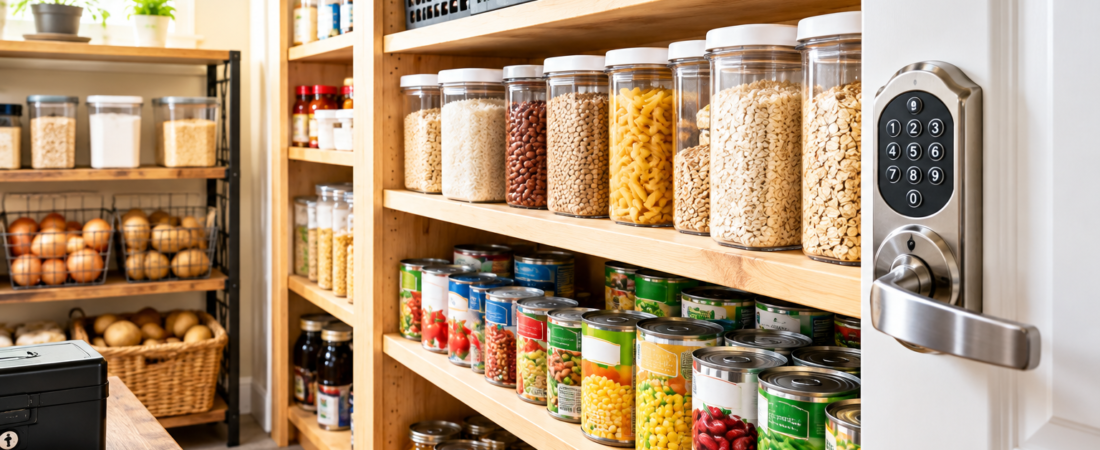
A food pantry is only useful if the food inside it remains safe, dry, organized, and accessible when you need it. Many people spend considerable time and money building an emergency food supply but pay less attention to protecting that supply from moisture, heat, pests, contamination, and poor organization.
Learning how to secure your food pantry does not require expensive equipment. A few practical habits can go a long way toward protecting stored food and making it easier to manage. Whether you have a small kitchen pantry, a basement storage area, or a dedicated emergency food room, the basic principles are similar.
Affiliate Disclosure: This article contains affiliate links. If you purchase through these links, I may earn a commission at no additional cost to you. I only recommend products I believe provide value to readers interested in emergency preparedness.
FREE 25 Foods Emergency Pantry Checklist
Download this free printable checklist to take with you while shopping or use it to organize your pantry.
✔ 25 shelf-stable foods
✔ Printable PDF
✔ Free to download
👉 Download the FREE Emergency Pantry Checklist (PDF)
Why Is Food Pantry Security Important?
Food pantry security means more than keeping the pantry door closed. Your stored food needs protection from environmental conditions, insects, rodents, accidental contamination, and unnecessary waste. Temperature, humidity, light, and storage containers can all affect how long certain foods remain usable. A secure pantry should also allow you to quickly identify what you have and determine which foods should be used first.
Think of Your Pantry as a Food Storage System
Instead of viewing your pantry as simply a collection of shelves, think of it as a system that needs regular attention. Food needs to be purchased, inspected, stored, rotated, inventoried, and eventually replaced. A simple system makes these jobs easier and reduces the chances that food will be forgotten. Even a small pantry can benefit from this approach.
Choose the Right Location for Food Storage

Where you store food can make a major difference in its shelf life. Whenever possible, choose a location that is cool, dry, clean, and protected from direct sunlight. Avoid placing long-term food storage next to appliances or other sources of heat. Areas prone to flooding, condensation, or large temperature fluctuations may also be poor choices for storing an emergency food supply.
Keep Food Away From Heat and Moisture
Heat can accelerate deterioration in many foods, while moisture can encourage mold growth and damage packaging. Do not store food directly on a basement or garage floor where moisture could reach containers. Shelving that keeps food elevated and allows air to circulate is usually a better option. Always follow specific storage instructions provided by the food manufacturer.
Use Appropriate Food Storage Containers
The original packaging is appropriate for many commercially packaged pantry foods, but some foods benefit from additional protection. Airtight containers can help protect dry goods from moisture and pests when they are designed for food storage. Mylar bags, food-grade buckets, jars, and other specialized containers can be useful for certain long-term storage applications. However, food should only be transferred into containers that are appropriate for food contact and suitable for the particular storage purpose.
Protect Dry Foods From Pantry Pests
Rice, flour, grains, cereal, pasta, and other dry foods can attract pantry pests if they are improperly stored. Inspect packages when bringing groceries home and avoid storing food in damaged packaging. Airtight food-grade containers can provide an additional barrier after opening packages. Regularly checking stored food allows you to identify problems before they spread throughout your pantry.
How to Keep Rodents Out of Your Food Pantry
Rodents are attracted to accessible food, crumbs, spills, and improperly sealed packages. Keep pantry shelves clean and avoid leaving open food containers uncovered. Store susceptible foods in sturdy, sealed containers rather than relying on thin packaging alone. If you notice signs of rodents, such as droppings, gnaw marks, or damaged packages, address the problem promptly rather than waiting for it to become widespread.
Keep the Pantry Clean
A clean pantry is easier to inspect and less attractive to pests. Wipe shelves regularly and immediately clean up spills or crumbs. Do not allow expired or damaged food packages to accumulate in the back of cabinets. Cleaning also makes it easier to notice moisture, insects, damaged containers, or other problems.
Organize Your Pantry for Better Food Security
Organization is one of the simplest ways to make a food pantry more secure. Keep cans, dry goods, cooking ingredients, and emergency foods in clearly defined areas. Avoid stacking heavy containers where they could fall or damage other food packages. Leave enough space to inspect labels and move older foods forward.
Practice First-In, First-Out Food Rotation
First-in, first-out rotation means using older food before newer purchases whenever practical. When you bring home a new package of rice, canned vegetables, pasta, or other pantry staples, place it behind the older packages. This keeps food moving through your pantry instead of allowing older products to disappear behind newer purchases. Regular rotation is one of the best ways to reduce unnecessary food waste.
Create a Pantry Food Inventory

An inventory helps you know exactly what is available. You do not need complicated software; a notebook, printed list, spreadsheet, or simple document can work. Record the type and approximate quantity of important foods and update the list when you use or purchase items. An inventory is especially helpful when managing a larger emergency food supply.
Separate Everyday Food From Emergency Food
If you maintain an emergency reserve, consider creating a clearly identified area for it. Your everyday pantry can contain foods you regularly use, while the emergency section can hold additional reserves. This makes it easier to determine how much food you truly have available. Remember that emergency food should still be inspected and rotated rather than forgotten.
Check Your Food Pantry Regularly
A secure pantry needs occasional inspections even when everything appears fine. Check packages for damage, cans for significant dents or swelling, and storage areas for insects or signs of rodents. Look for moisture, unusual odors, leaks, or other conditions that could compromise food. A quick monthly inspection can identify small problems before they become expensive ones.
Build a Simple Pantry Inspection Routine
Choose one day each month to inspect your stored food. Check the shelves, rotate older items, update your inventory, clean crumbs, and look for damaged packages. You can also make a shopping list based on what needs replacing. Turning pantry maintenance into a routine makes it much less overwhelming.
Recommended Resource: The Lost Super Foods
If you’re building a long-term emergency food supply, it’s worth learning about the foods our grandparents and earlier generations relied on before modern refrigeration and grocery stores became common.
The Lost Super Foods is a guide that explores forgotten preservation methods, shelf-stable foods, and traditional survival recipes that helped families thrive during difficult times. The guide includes practical information on food storage, preservation techniques, and nutrient-dense foods that can complement a well-stocked emergency pantry.
Whether you’re just starting your preparedness journey or looking to expand your food storage knowledge, this resource may provide valuable insights for creating a more resilient pantry.
👉 Click here to learn more about The Lost Super Foods.
Keep Your Food Pantry Accessible
Security also means being able to reach your food when you need it. Avoid creating unstable towers of cans or storing important supplies behind unrelated household items. Heavy containers should be stored where they can be safely handled. If you have family members who may need to access the pantry during an emergency, make sure they know where important supplies are located.
Final Thoughts on Securing Your Food Pantry
Protecting a food pantry is mostly about consistent habits rather than expensive equipment. Choose a suitable storage location, control moisture and heat, protect food from pests, use appropriate containers, rotate supplies, and inspect your pantry regularly. Organization makes every one of these tasks easier. A secure food pantry is not simply full—it is clean, protected, organized, and ready to provide food when your household needs it.
Related Articles
These guides will help build a stronger emergency pantry:
Is Your Survival Pantry Prepared?