Introduction
A 30-day emergency food supply is one of the smartest investments you can make for your family’s security and peace of mind. Whether you’re preparing for severe weather, power outages, supply chain disruptions, job loss, or other unexpected events, having enough food on hand can help you avoid panic buying and unnecessary stress.
The good news is that building a 30-day food supply doesn’t require spending thousands of dollars on expensive survival foods. In fact, most families can create a practical emergency pantry using foods they already eat every day.
Affiliate Disclosure: This post may contain affiliate links. I may earn a commission at no extra cost to you.
In this guide, you’ll learn exactly how to build a 30-day emergency food supply, which foods to prioritize, how much food you’ll need, and how to store everything safely.
Get Your FREE Emergency Checklist
👉 Click here to download your free checklist
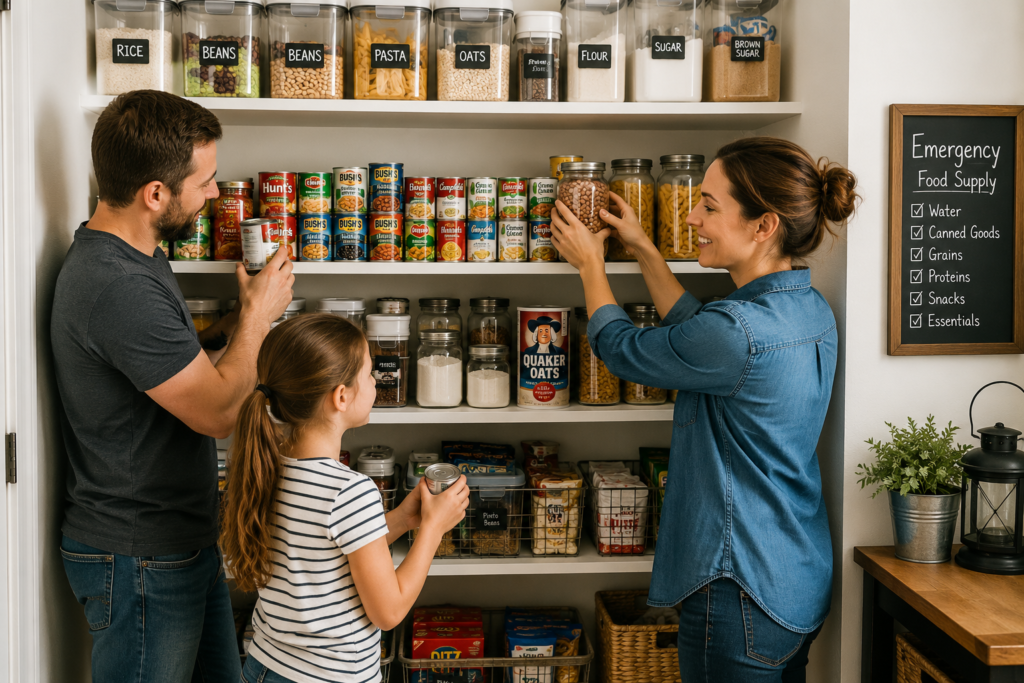
Why Build A 30-Day Emergency Food Supply?
Most households keep only a few days’ worth of food available. If grocery stores become inaccessible due to storms, emergencies, or transportation disruptions, those supplies can disappear quickly.
A 30-day food supply provides several benefits:
- Reduces dependence on frequent grocery shopping
- Helps your family during natural disasters
- Protects against temporary food shortages
- Provides financial flexibility during hard times
- Reduces stress during emergencies
The goal isn’t to prepare for the end of the world. The goal is to have enough food available to keep your family fed and comfortable for one month.
“If you’re building a long-term food reserve, our guide explains what foods to stock first.”
Step 1: Calculate Your Family’s Food Needs
Before buying anything, determine how many people you’ll be feeding.
For example:
- 1 person = 30 days of food
- 2 people = 60 person-days
- 4 people = 120 person-days
A typical adult needs between 1,800 and 2,500 calories daily, depending on age and activity level.
For emergency planning, many preparedness experts recommend targeting approximately 2,000 calories per person per day.
For a family of four:
- 2,000 calories × 4 people = 8,000 calories daily
- 8,000 calories × 30 days = 240,000 calories
This may sound overwhelming, but calorie-dense pantry foods make it achievable.
Step 2: Focus On Foods Your Family Already Eats
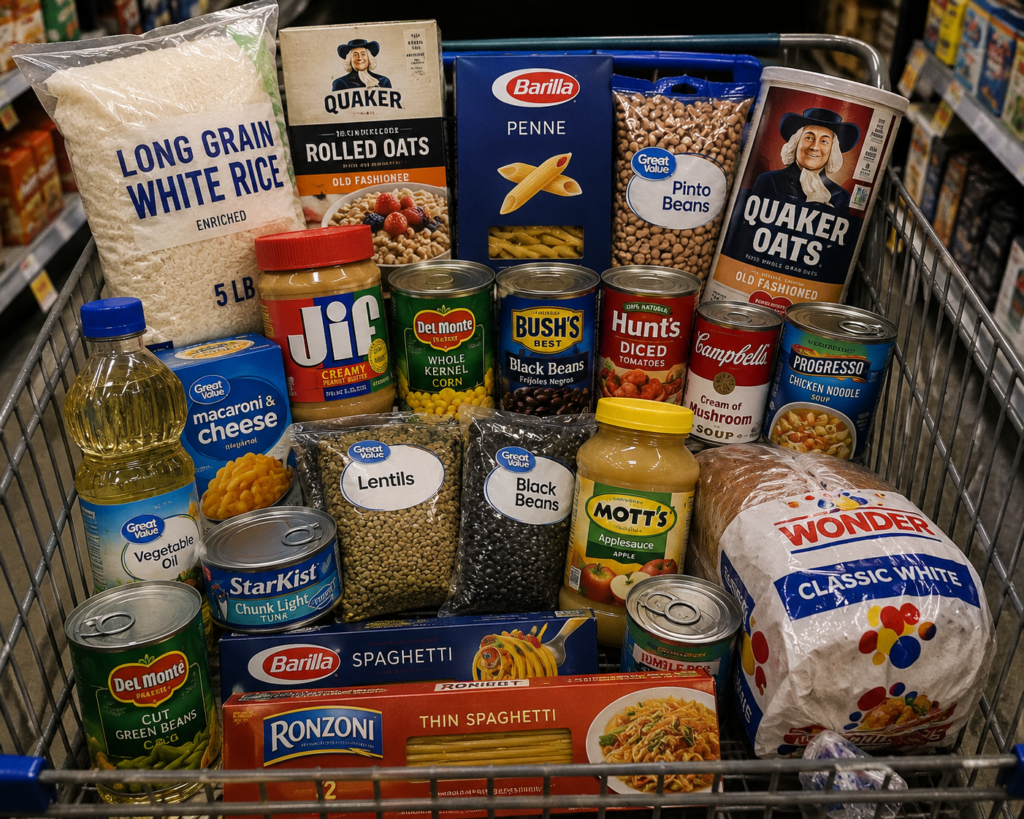
One of the biggest mistakes beginners make is purchasing unfamiliar survival foods that nobody likes.
Instead, stock foods your family already enjoys.
Good examples include:
Grains
- Rice
- Pasta
- Oatmeal
- Flour
- Crackers
- Pancake mix
Protein Sources
- Canned tuna
- Canned chicken
- Peanut butter
- Beans
- Lentils
- Protein powder
Fruits And Vegetables
- Canned vegetables
- Canned fruit
- Freeze-dried fruits
- Applesauce
Dairy Alternatives
- Powdered milk
- Shelf-stable milk
Comfort Foods
- Coffee
- Tea
- Hot chocolate
- Honey
- Sugar
- Seasonings
Familiar foods make emergencies much easier to manage.
If you’re just starting an emergency pantry, learn Cheap Foods To Stockpile from the ground up.
Step 3: Build Around Pantry Staples
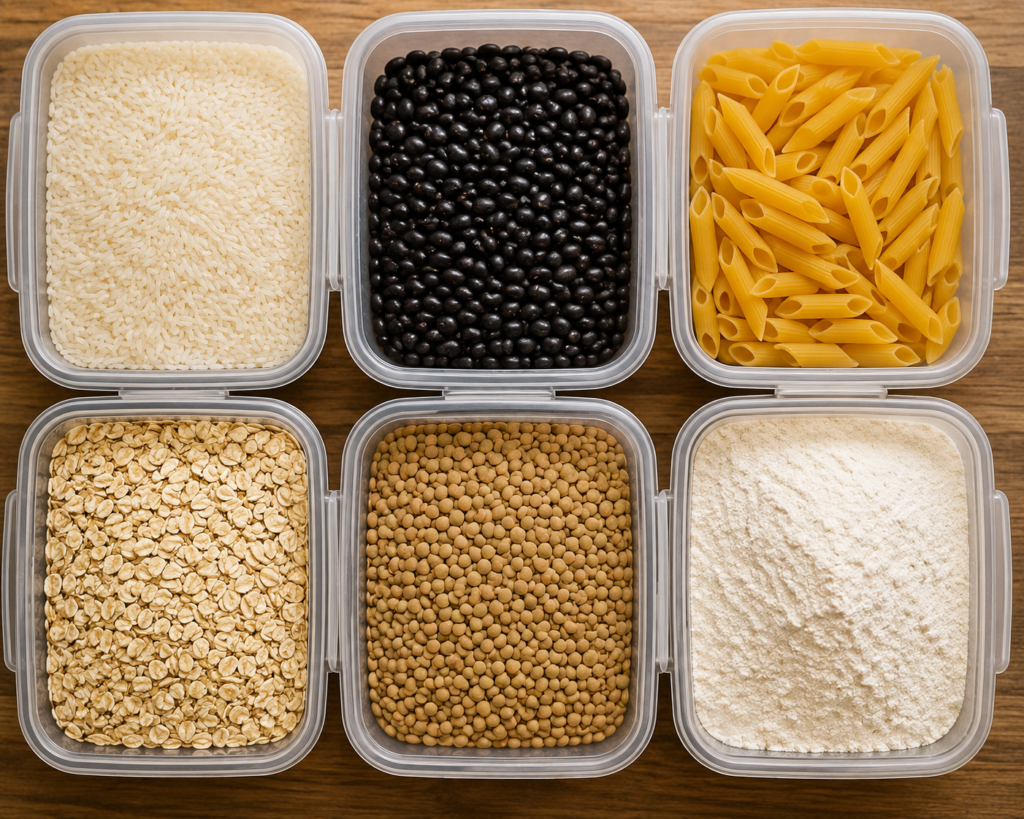
Certain foods offer excellent shelf life, affordability, and nutritional value.
Rice
Rice is one of the most affordable emergency foods available.
Benefits:
- Long shelf life
- High calorie content
- Easy to prepare
- Works with countless meals
Beans
Beans provide protein, fiber, and calories.
Options include:
- Pinto beans
- Black beans
- Kidney beans
- Lentils
Pasta
Pasta stores well and cooks quickly.
Stock:
- Spaghetti
- Macaroni
- Egg noodles
Oatmeal
Oats are inexpensive, nutritious, and filling.
Store:
- Old-fashioned oats
- Quick oats
These staples form the foundation of a strong emergency food supply.
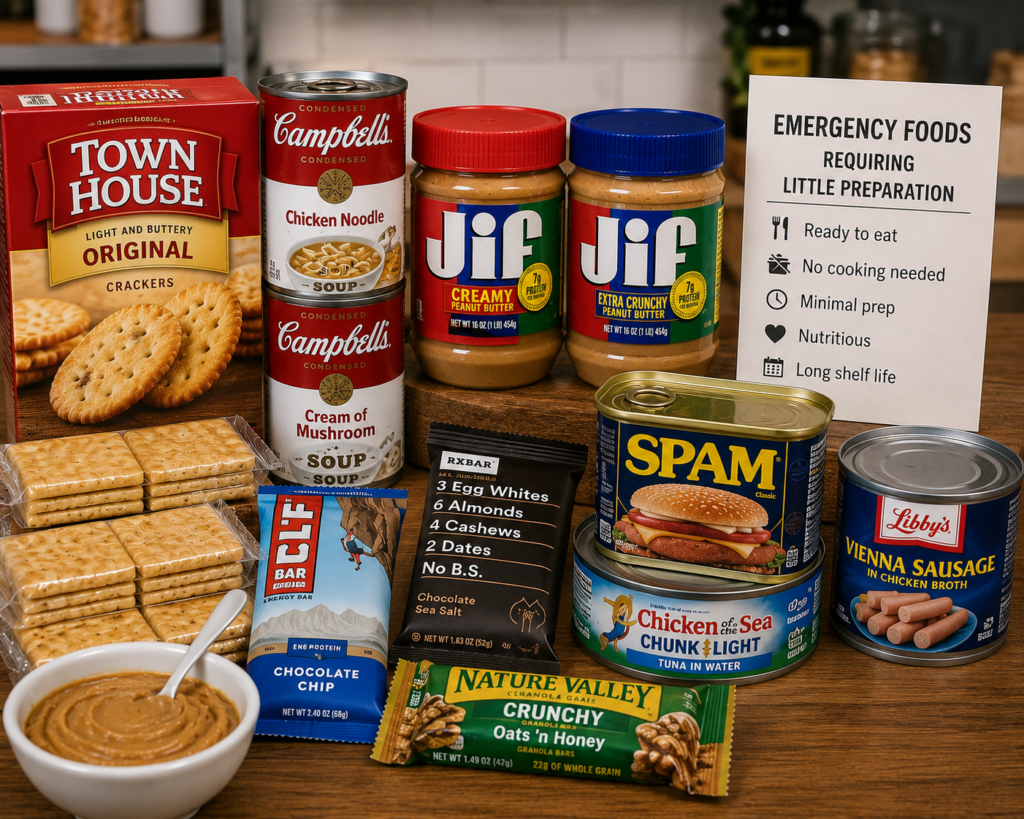
Step 4: Include Ready-To-Eat Foods
During emergencies, cooking may be limited.
Include foods that require little or no preparation.
Examples:
- Peanut butter
- Granola bars
- Canned soups
- Crackers
- Canned meats
- Trail mix
- Protein bars
Ready-to-eat foods become especially valuable during power outages.
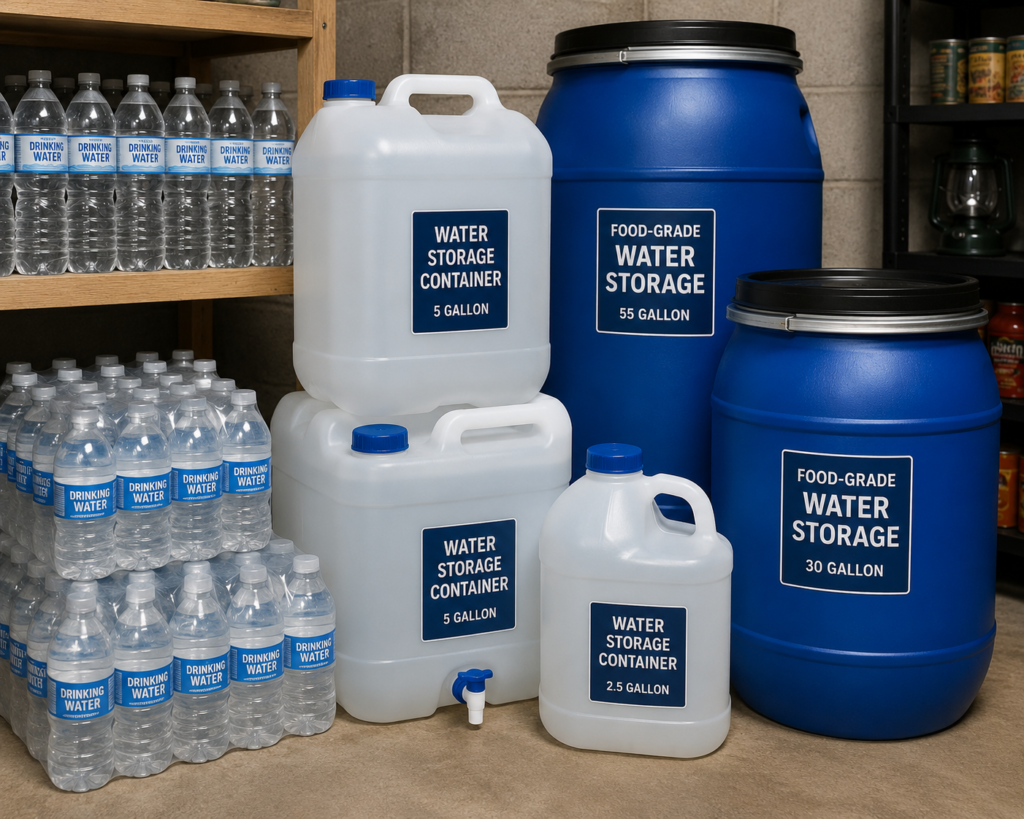
Step 5: Don’t Forget Water
Food is important, but water is even more critical.
A common recommendation is:
- One gallon per person per day
For a family of four:
- 4 gallons daily
- 120 gallons for 30 days
Store water in:
- Food-grade containers
- Water bricks
- Commercially bottled water
Rotate stored water periodically according to manufacturer recommendations.
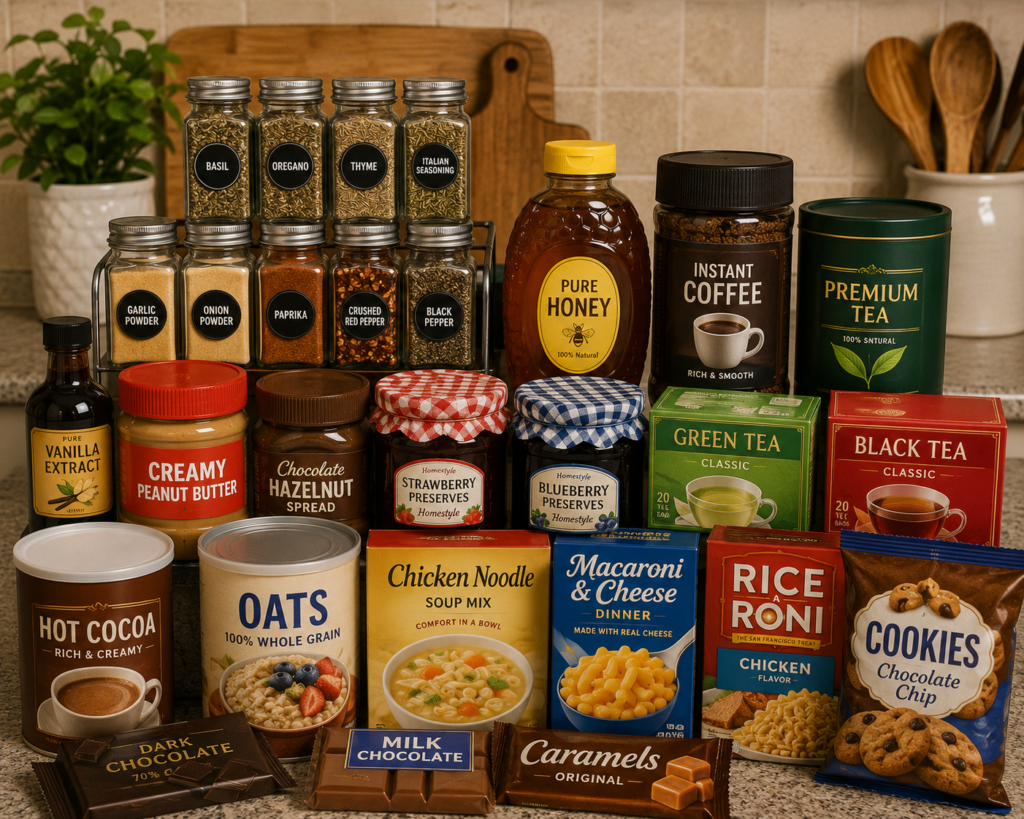
Step 6: Add Flavor And Variety
Eating rice and beans every day can become monotonous.
Store foods that improve flavor and morale.
Examples:
- Salt
- Pepper
- Garlic powder
- Hot sauce
- Bouillon cubes
- Gravy mixes
- Honey
- Jam
Small comfort foods can make a big difference during stressful situations.
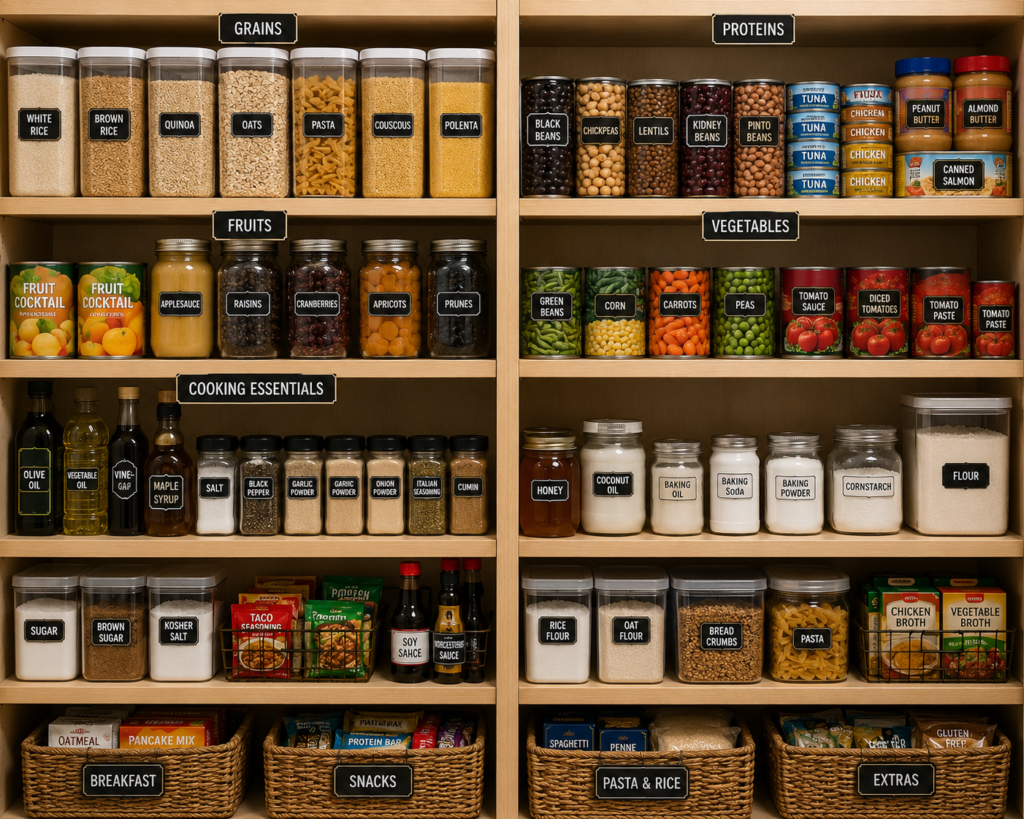
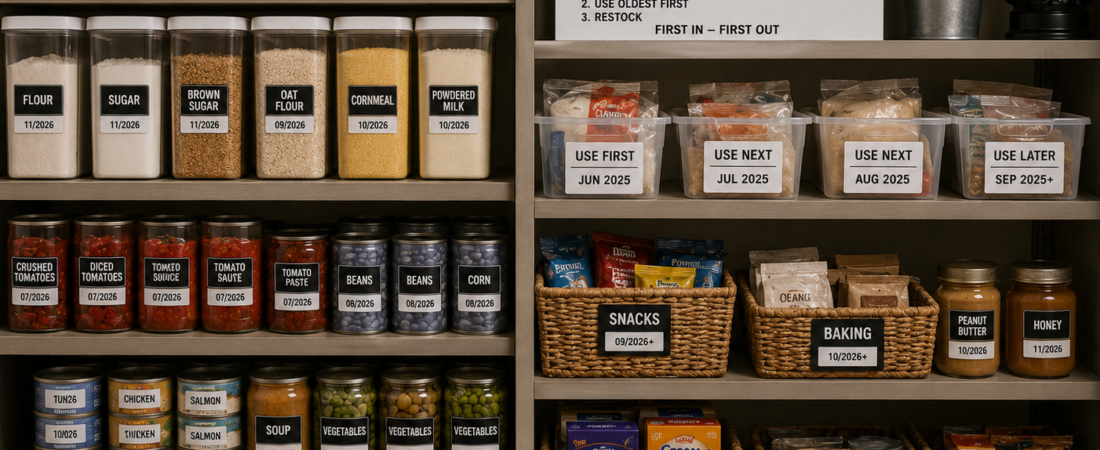
Step 7: Use The First-In, First-Out Method
Food storage works best when foods are regularly rotated.
Follow the FIFO principle:
First In, First Out.
Use older products first and replace them during routine grocery shopping.
Benefits include:
- Less waste
- Fresher inventory
- Better food quality
- Lower overall costs
A rotating pantry is often more practical than storing food and forgetting about it.
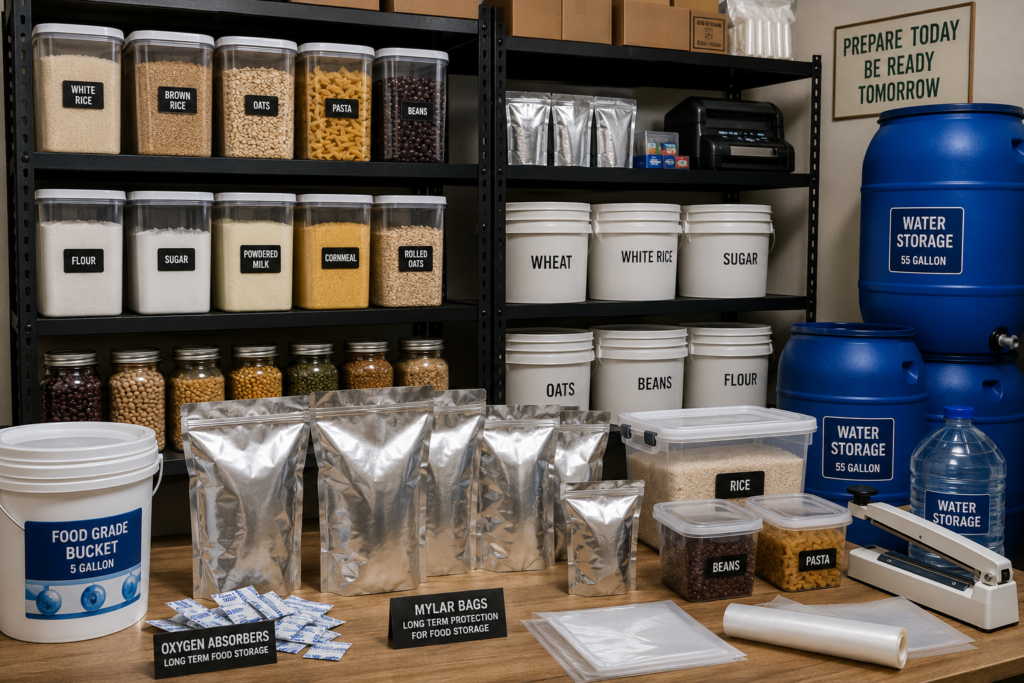
Sample 30-Day Emergency Food Supply List
Here is a simple starter inventory for one adult.
Grains
- 20 pounds rice
- 10 pounds pasta
- 10 pounds oats
Protein
- 15 cans tuna
- 10 cans chicken
- 10 pounds beans
- 2 jars peanut butter
Fruits And Vegetables
- 20 cans vegetables
- 20 cans fruit
Dairy
- Powdered milk
Cooking Essentials
- Salt
- Sugar
- Cooking oil
- Flour
Convenience Foods
- Soups
- Crackers
- Granola bars
Adjust quantities based on family size and dietary needs.
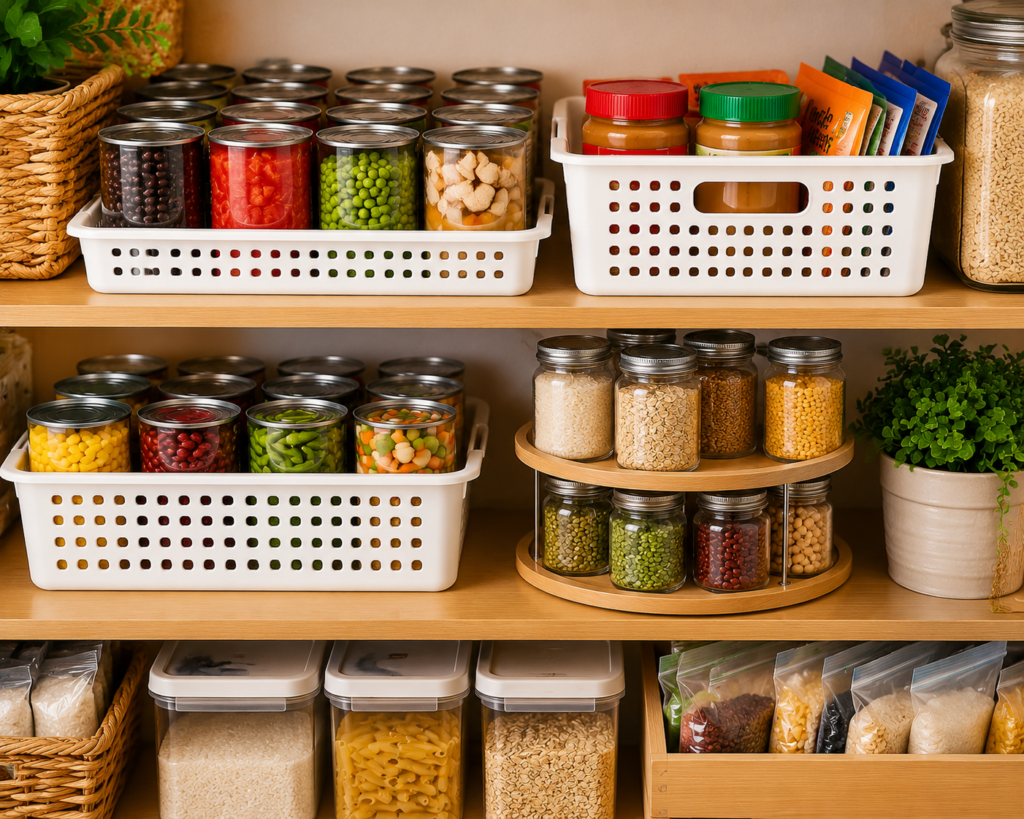
Common Food Storage Mistakes To Avoid
Buying Too Much At Once
Build gradually.
Purchasing a little extra each grocery trip is often easier than making one large purchase.
Ignoring Expiration Dates
Track expiration dates and rotate inventory regularly.
Forgetting Water
Many people focus entirely on food and overlook water storage.
Not Storing What You Eat
Emergency food should consist largely of foods your family already enjoys.
Poor Storage Conditions
Store food in:
- Cool locations
- Dry locations
- Dark locations
Heat and moisture reduce shelf life.
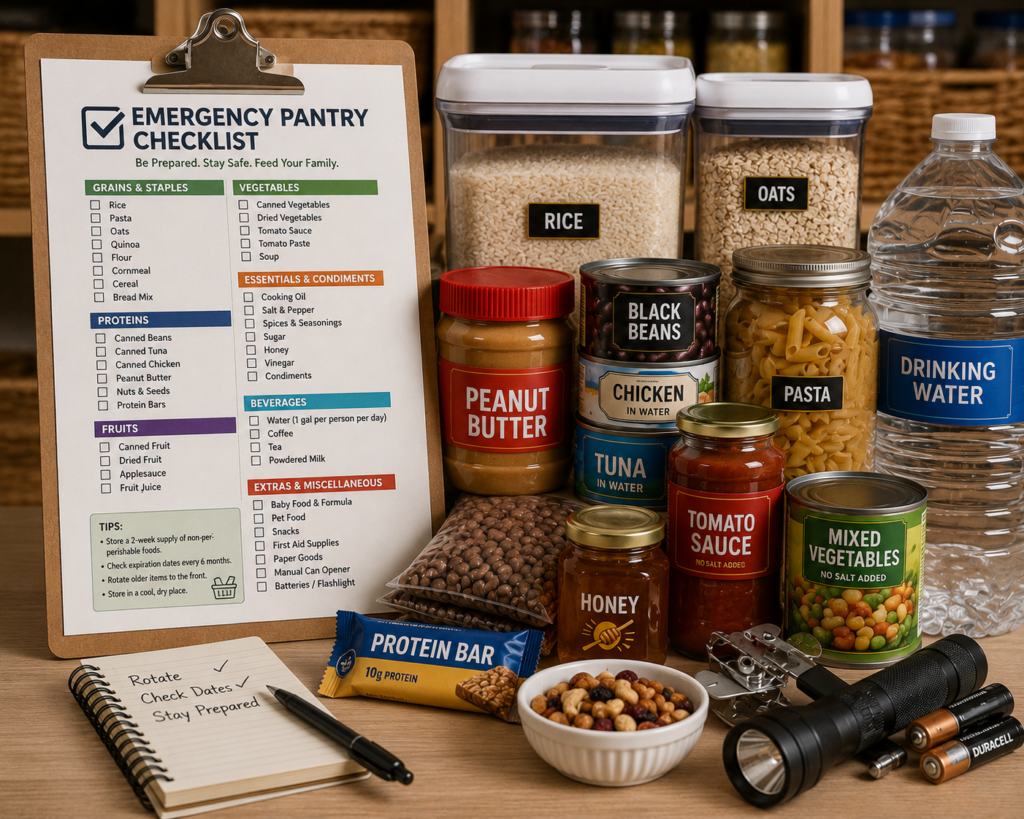
Free Emergency Checklist
Want an easy way to track your emergency food supply?
Download our FREE Checklist: 10 Survival Foods That Could Save Your Stockpile
✔ Food Storage Essentials
✔ Pantry Inventory Tracker
✔ Emergency Shopping List
✔ Shelf-Life Guide
Enter your email below to receive the FREE Checklist: 10 Survival Foods That Could Save Your Stockpile
Related Articles
- 25 Pantry Foods That Last the Longest
- How to Store Food Without a Basement
- Rotate Your Emergency Food Supply Without Waste
Final Thoughts
Building a 30-day emergency food supply doesn’t have to be expensive or complicated. By focusing on foods your family already eats, gradually expanding your pantry, and regularly rotating your inventory, you can create a practical emergency food reserve that provides security and peace of mind.
Start small. Buy a little extra each week. Before long, you’ll have a well-stocked pantry capable of supporting your family through unexpected challenges.