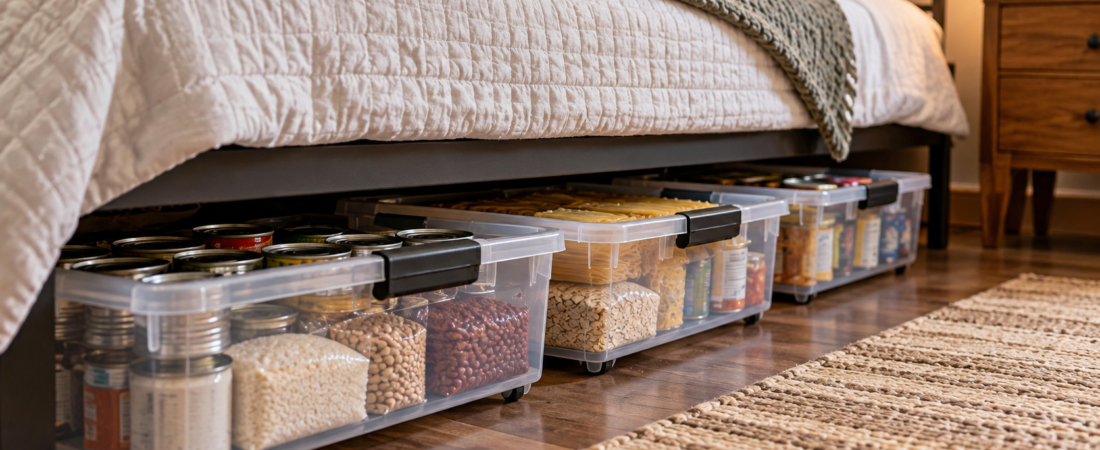
Finding room for emergency food supplies can be difficult when you live in a small apartment, rented townhouse, or home without a basement. Fortunately, these under bed survival food storage ideas can help you make the most of unused space without overcrowding your kitchen, filling your closets, or sacrificing your living space. With the right containers, suitable storage conditions, and a simple organization system, the area beneath your bed can become a practical extension of your emergency pantry.
You don’t need a large house or a dedicated storage room to prepare for unexpected emergencies. Even if space is limited, you can gradually build a useful supply of shelf-stable foods while keeping your home neat and comfortable.
Affiliate Disclosure: This post may contain affiliate links. I may earn a commission at no extra cost to you.
Why Under-Bed Storage Works for Emergency Food Supplies
Make Use of Space You Already Have
The area beneath your bed is often overlooked when planning an emergency food supply. A queen-size mattress covers approximately 33 square feet of floor space, and the space beneath the frame may accommodate several shallow storage containers.
Instead of allowing this area to collect dust or miscellaneous clutter, use it to organize foods you want to keep available for emergencies.
Under-bed storage can be especially useful if you:
- Live in a small apartment or rental property.
- Don’t have a basement, garage, or dedicated pantry.
- Need additional room for canned goods and dry staples.
- Want to keep emergency supplies organized and out of sight.
- Are building your food supply gradually on a limited budget.
Choose Foods That Store Well in Small Spaces

Not every food is suitable for storage beneath a bed. Focus on shelf-stable products that can be kept safely in their original packaging or appropriate food-safe containers.
Consider storing:
- White rice in properly sealed packaging.
- Dry pasta and noodles.
- Rolled oats.
- Dried beans and lentils.
- Crackers and other shelf-stable snacks.
- Commercially canned vegetables, beans, and soups.
- Powdered milk in unopened, shelf-stable packaging.
- Ready-to-eat foods that require little or no preparation.
Always follow the manufacturer’s storage instructions. The space beneath your bed should remain cool, dry, and protected from temperature extremes. A convenient storage location is not necessarily a suitable one for every type of food.
The Best Containers for Under-Bed Food Storage
Low-Profile Plastic Storage Bins
Shallow plastic storage bins are among the most practical options for an under-bed emergency pantry. Look for sturdy containers with secure lids and dimensions that fit comfortably beneath your bed frame.
Wheels can make heavier bins easier to move, particularly when you need to check your supplies or clean underneath the bed.
When choosing storage bins, look for features such as:
- Durable plastic construction.
- Secure, easy-to-open lids.
- A low profile that fits beneath your bed.
- Enough room to store food without crushing packages.
- Surfaces that are easy to wipe clean.
- Space for clear labels identifying the contents.
Use clean, dry bins to provide an additional barrier against dust and household pests. Remember that ordinary plastic totes are not necessarily airtight or rodent-proof.
Flat Boxes for Properly Packaged Dry Foods
Flat boxes can help you organize lightweight dry foods and separate different categories of supplies.
For example, one box might hold rice and pasta, while another contains oatmeal, crackers, and other breakfast foods.
However, cardboard alone offers limited protection against moisture and rodents. Keep food in intact original packaging or suitable food-safe packaging, and use a protective outer container when necessary.
If you use Mylar bags for dry foods, follow the packaging manufacturer’s instructions. Suitable oxygen absorbers may be appropriate for certain dry foods, but they should be selected and used according to the food type and storage method.
Why Large Five-Gallon Buckets May Not Be Ideal
Five-gallon food-grade buckets are popular among people who store emergency food in bulk. However, they can be inconvenient beneath a bed because of their height and round shape.
A bucket may not fit under a standard bed frame, and several round buckets can leave awkward gaps between containers.
Instead, consider smaller, flat, rectangular containers that are easier to move and organize. Reserve larger food-grade buckets for a closet, pantry, or another suitable storage area.
Practical tip: Measure the available height, width, and depth beneath your bed before purchasing containers. Allow enough clearance to pull them out without scraping the floor or getting stuck.
How to Organize Your Under-Bed Emergency Food Supply

Group Foods by Category
An organized storage system makes it easier to find ingredients and monitor your supplies.
Rather than placing everything into one large container, divide your food into manageable categories.
For example:
- Bin 1: Grains and pasta — rice, pasta, noodles, and oats.
- Bin 2: Canned foods — vegetables, beans, soups, and other canned staples.
- Bin 3: Breakfast foods — shelf-stable breakfast items and suitable powdered milk.
- Bin 4: Ready-to-eat foods — products that require little or no cooking.
Adjust the number and size of your bins to match your available space. If you only have room for two containers, combine compatible categories and use smaller bags or dividers to keep everything organized.
Label Every Container
Clear labels help you identify supplies quickly and make it easier to monitor expiration and best-by dates.
Include the following information on each container:
- The main food category.
- A brief list of the contents.
- The date you placed the items in storage.
- Best-by or expiration dates, where applicable.
You can also maintain a simple paper inventory or spreadsheet. Record quantities, check items as you use them, and identify supplies that need replacing.
Keep Frequently Used Foods Accessible
Store foods you expect to use first in the easiest-to-reach containers. Less frequently accessed emergency supplies can go in bins farther beneath the bed.
Avoid packing containers so tightly that you must move several bins to reach one item. Your emergency pantry should be convenient to use, not simply capable of holding a large amount of food.
Five Ways to Keep Under-Bed Food Storage Discreet
1. Use a Bed Skirt
A floor-length bed skirt can conceal storage containers and help your bedroom maintain a tidy appearance.
Choose a style that reaches close to the floor without dragging excessively. Make sure it doesn’t interfere with ventilation or prevent you from removing containers for cleaning and inspection.
2. Choose Neutral-Colored Storage Bins
If your bed frame leaves containers visible, choose neutral colors that complement your bedroom furniture.
Matching bins can create a more organized appearance while allowing you to identify each container with a simple label.
3. Consider a Storage Bed Frame
A bed frame with built-in drawers or a lift-up mattress can provide additional storage capacity.
Before investing in a new frame, compare the cost with the price of ordinary under-bed bins. If you’re working with a limited budget, using the space beneath your existing bed may be the more practical choice.
4. Add a Storage Bench at the Foot of the Bed
A storage bench can provide extra room for lightweight emergency supplies, including first-aid items, flashlights, and emergency blankets.
It may also help conceal the view beneath the bed from the bedroom entrance. Keep food and nonfood supplies separated and clearly labeled.
5. Keep the Bedroom Looking Organized
You don’t need expensive furniture or elaborate modifications to make under-bed storage look neat.
Use matching bins, arrange them in straight rows, and keep the surrounding area free of clutter. Choose containers that fit comfortably and leave enough room to pull them out when needed.
How to Protect Your Under-Bed Food Supply From Dust and Pests
Use Protective Containers
Dust, pet hair, insects, and rodents can compromise food packaging. Keep your supplies in clean containers with securely fitting lids, and inspect the storage area regularly.
Do not assume that an ordinary storage tote or snap-on lid is completely airtight or pest-proof.
Keep food in intact original packaging or transfer suitable dry foods to appropriate food-safe packaging. Never store food in damaged packages or containers that have been exposed to pests.
Keep Food Away From Moisture and Heat
The space beneath a bed can be convenient, but it may not be suitable for long-term food storage in every home.
Avoid placing emergency food near heating vents, radiators, damp exterior walls, or areas where condensation occurs. Excessive heat, moisture, and temperature fluctuations can shorten the quality and shelf life of many foods.
Follow the manufacturer’s storage recommendations. Protect canned goods from excessive heat, freezing, rust, and physical damage.
Clean Beneath the Bed Regularly
Dust and pet hair can accumulate quickly under furniture. Plan to inspect your supplies at least once every three months.
During each inspection:
- Remove the storage bins.
- Vacuum or clean the floor beneath the bed.
- Wipe the outside of each container.
- Check for moisture, insects, or signs of rodents.
- Inspect food packaging for damage.
- Update your inventory and rotate supplies as needed.
If you discover signs of pests or moisture, address the problem before returning food to the area.
How Much Emergency Food Can You Store Under Your Bed?
Start With the Space You Have
Your storage capacity depends on the bed frame’s clearance, the dimensions of your containers, and the space needed to remove them.
For example, if your bed accommodates two shallow bins, you could dedicate one to dry staples and the other to canned or ready-to-eat foods.
A larger bed may accommodate additional containers, but you shouldn’t assume that every available inch can be filled safely or conveniently.
Build Your Supply Gradually
You don’t need to purchase a large quantity of food all at once. Start with foods your household already eats and add a few extra shelf-stable items when your budget allows.
Use this simple approach:
- Make a list of the foods you already have.
- Identify the staples your household uses regularly.
- Choose foods that suit your storage conditions and dietary needs.
- Add a few extra items during routine grocery shopping.
- Record quantities and dates in your inventory.
- Use older products first when they remain safe and suitable to eat.
Build toward a realistic emergency food goal based on your household size, budget, available space, and ability to prepare meals.
Don’t Forget Water and Cooking Needs
Food is only one part of emergency preparedness. You should also consider how you’ll obtain safe drinking water and prepare meals if electricity or gas becomes unavailable.
Water containers can be heavy and bulky, so another suitable storage location may be preferable. Keep water away from chemicals and other potential contaminants.
Include ready-to-eat foods whenever possible. If your supply includes dry staples such as rice and beans, make sure you have a safe way to prepare them and enough water for cooking.
Common Under-Bed Food Storage Mistakes to Avoid
Storing Food in Inappropriate Conditions
A hidden storage space isn’t automatically a safe storage space. Check the temperature, moisture levels, and manufacturer’s recommendations before placing food beneath your bed.
Overloading Containers
Heavy bins can be difficult to move and may damage flooring if dragged carelessly. Use sturdy containers, distribute weight sensibly, and avoid lifting loads that are too heavy for you.
Check your bed frame manufacturer’s weight limits before placing substantial additional weight around or beneath the bed. Do not assume every bed frame or floor can safely accommodate the same load.
Forgetting to Rotate Supplies
Emergency food can go to waste when items are hidden and forgotten.
Maintain an inventory, check dates regularly, and use older products before newer ones when appropriate. Replace food that is damaged, contaminated, or stored outside its recommended conditions.
Relying Entirely on Under-Bed Storage
Under-bed storage is a useful supplement to your emergency pantry, but it may not provide enough room for your household’s entire food supply.
Combine it with other suitable storage areas, such as a closet shelf, kitchen cabinet, or designated pantry. Keep frequently needed supplies accessible and spread your emergency provisions across appropriate locations when practical.
FREE 25 Foods Emergency Pantry Checklist
Building an emergency pantry is easier with a shopping list to follow.
Download this free printable checklist to take with you while shopping or use it to organize your pantry.
✔ 25 shelf-stable foods
✔ Printable PDF
✔ Free to download
👉 Download the FREE Emergency Pantry Checklist (PDF)
Final Thoughts on Under Bed Survival Food Storage Ideas
Make Every Inch of Space Count
Creating an emergency food supply doesn’t require a basement, a large pantry, or expensive storage equipment. These under bed survival food storage ideas can help you make better use of unused space while keeping your supplies organized and accessible.
Start by measuring the space beneath your bed, choosing a few suitable containers, and filling them with shelf-stable foods your household already uses. Protect your supplies from moisture, pests, and temperature extremes, and check your inventory regularly.
Related Articles
Survival Foods You Can Eat Without Cooking