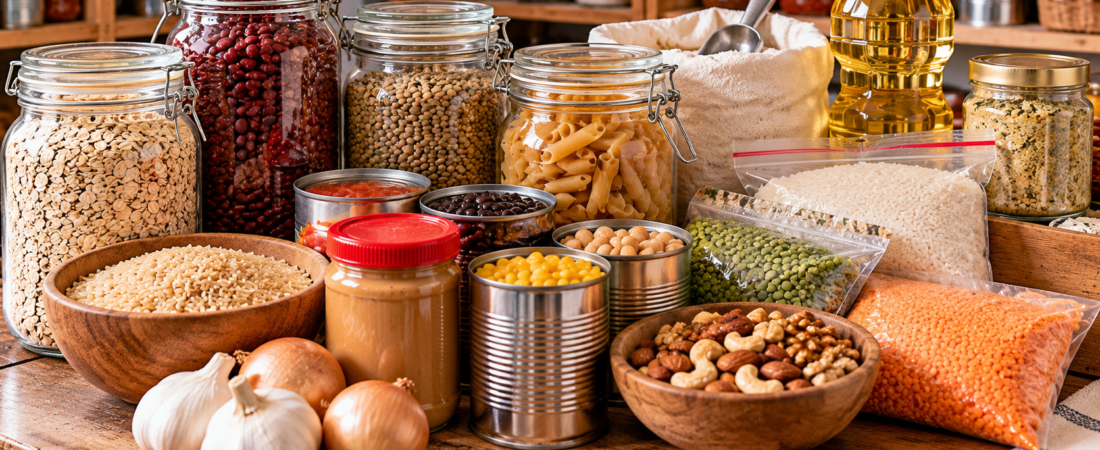
Walk into almost any grocery store, and you’ll find shelf-stable foods: hundreds of foods that can sit on a pantry shelf.
But that doesn’t mean you need hundreds of them.
Affiliate Disclosure: This post may contain affiliate links. I may earn a commission at no extra cost to you.
When you’re building a practical emergency pantry, the better question isn’t “What shelf-stable foods exist?”
It’s:
“Which ones are actually worth giving space to?”
That decision depends on how your household eats, how much preparation you’re willing to do, your available storage space, and how often you’ll realistically use the food.
So instead of giving you another giant shopping list, let’s make the decision a little easier.
Here are 12 shelf-stable foods worth considering, along with the main reason each one may deserve a place in your pantry—and the tradeoff to keep in mind.
1. Rice

Rice earns its place in many pantries because it’s familiar, versatile, and easy to combine with other ingredients.
White rice is particularly common in emergency-pantry plans, but the right choice depends on what you already cook.
If rice is a regular part of your meals, keeping an additional supply can be an easy way to strengthen your pantry without introducing an unfamiliar food.
Its biggest advantage is flexibility. Rice can accompany beans, vegetables, canned meats, sauces, or other ingredients.
The tradeoff
Dry rice requires cooking, which means you’ll need water and a suitable heat source.
It’s a useful shelf-staple, but it shouldn’t necessarily be the only type of food you store.
2. Pasta
Pasta is another familiar staple that can serve as the foundation for many simple meals.
Spaghetti, macaroni, penne, rotini, and other varieties all work, but there’s no need to collect every shape.
Choose the varieties that fit your normal meals.
Pasta becomes especially useful when paired with ingredients such as tomato sauce, canned tomatoes, vegetables, seasonings, or other foods already in your pantry.
The tradeoff
Pasta is inexpensive and versatile, but it also requires boiling water and cooking time.
That makes it useful as a staple rather than a complete solution for every situation.
3. Dried Beans
Dried beans can be an economical way to add protein to a pantry.
Pinto beans, black beans, kidney beans, navy beans, and chickpeas all offer different flavors and uses.
Their advantage is that they can provide a substantial pantry staple without relying on cans.
But there’s an important consideration: preparation time.
Dried beans need water, cooking, and planning.
The tradeoff
They’re practical when you have the resources and time to cook them.
If you want foods that require very little preparation, you’ll want other options alongside them.
4. Canned Beans
Canned beans solve a different problem.
They’re already cooked and can generally be used much more quickly than dried beans.
That makes them particularly useful when convenience matters.
Another kind of shelf-stable foods that can be added to rice, soups, salads, chili, or other familiar dishes without starting the cooking process from scratch.
The tradeoff
Canned beans take up more storage space than dried beans and can cost more per serving.
Their advantage is the time they save.
For many pantries, keeping both dried and canned beans can make sense because they serve different purposes.
5. Oats
Oats are easy to overlook because they’re often thought of simply as breakfast food.
That’s actually part of their appeal.
They’re familiar, inexpensive, and can fit naturally into a normal routine.
Rolled oats can be used for oatmeal and baking, while other varieties may have different preparation requirements.
The tradeoff
Oats aren’t a complete pantry solution.
Their main value is as a convenient staple that can provide another breakfast option and add variety to a pantry otherwise dominated by dinner foods.
If breakfast is already covered by other foods you prefer, you may not need a large supply.
6. Canned Vegetables
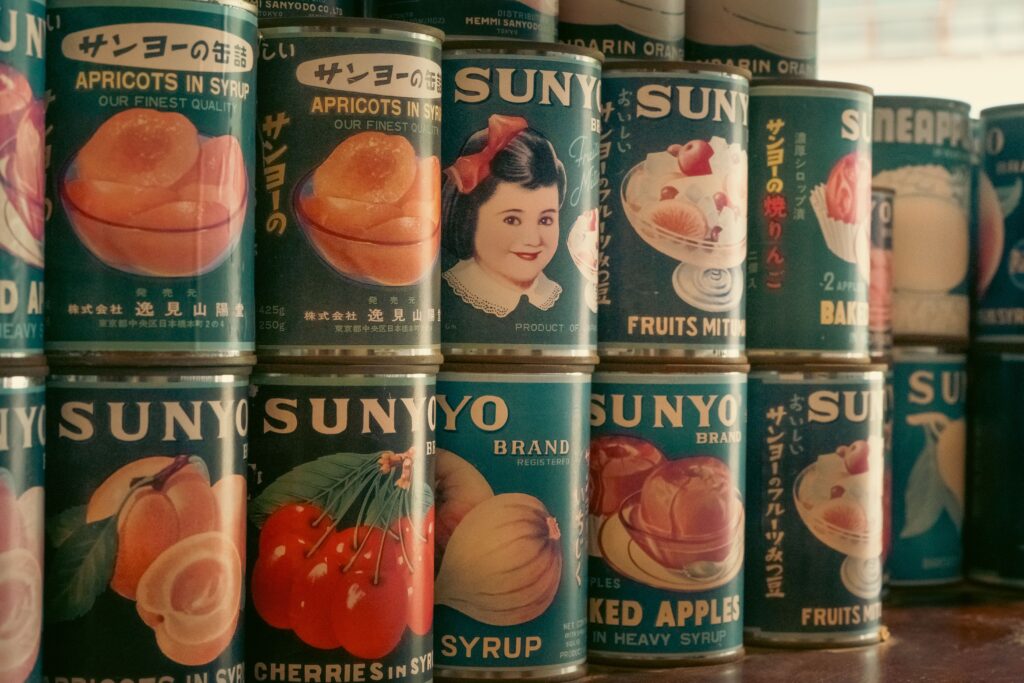
Canned vegetables can add variety without the preparation required for fresh produce.
Corn, green beans, peas, carrots, and mixed vegetables are common examples.
They can be served as sides or incorporated into soups, casseroles, rice dishes, and other meals.
One advantage is convenience: they’re already prepared and generally require only heating, or in some cases can be eaten without additional cooking.
The tradeoff
Not every canned vegetable will be equally useful to you.
Focus on varieties that already have a place in your normal meals rather than filling your shelves with cans that are likely to remain untouched.
7. Canned Fruit
A pantry doesn’t have to be dominated by savory foods.
Canned peaches, pears, pineapple, applesauce, and similar products can provide a welcome change.
They can work as snacks, side dishes, or additions to breakfast.
Having something sweet or fruity available can also make an extended period of eating from pantry supplies feel less monotonous.
The tradeoff
Canned fruit can contain added sugar depending on the product.
Check labels and choose varieties that fit your dietary preferences.
You also don’t need every type available. A few familiar favorites are enough to add variety.
8. Peanut Butter
Peanut butter is one of the simplest low-preparation foods to keep in a pantry.
It can be spread on crackers or bread, added to oatmeal, or used in other familiar foods.
Its biggest advantage is convenience.
You don’t need to cook it, and you don’t need a complicated recipe to use it.
The tradeoff
Peanut butter isn’t appropriate for households dealing with peanut allergies, and dietary preferences vary.
If it doesn’t work for your household, the broader idea still applies: keep a few familiar foods that provide calories and require little preparation.
9. Canned Tomatoes
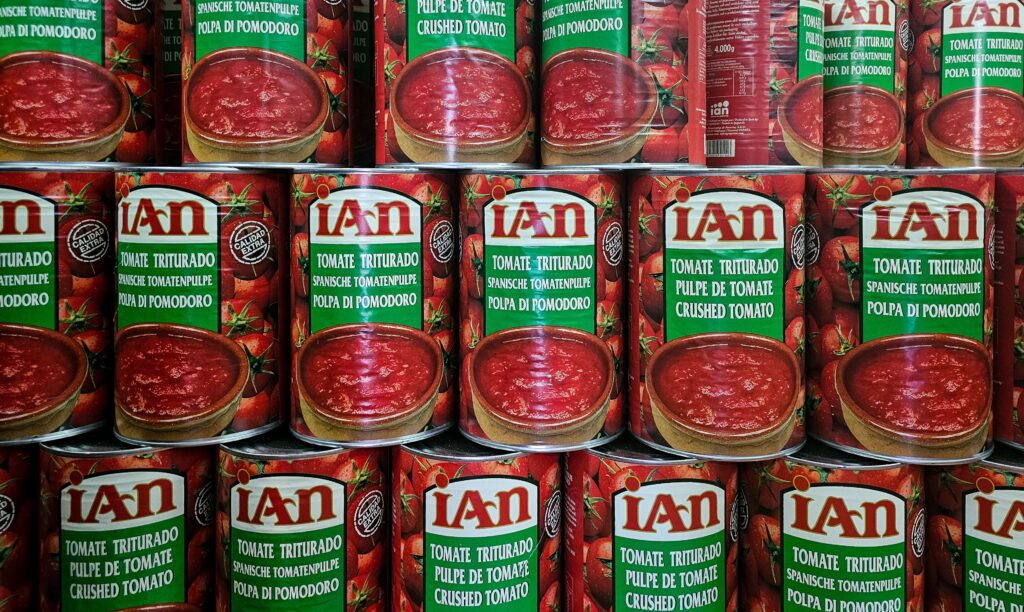
Canned tomatoes may not look particularly exciting on a grocery shelf.
Their value becomes more obvious when you’re cooking.
Diced, crushed, or whole tomatoes can be used in sauces, soups, stews, rice dishes, and other recipes.
They’re especially useful because one ingredient can contribute to several different types of meals.
The tradeoff
Canned tomatoes are primarily a supporting ingredient rather than a complete meal.
Their usefulness therefore depends partly on what else is in your pantry.
If you’re storing pasta, beans, rice, or other foods that work well with tomatoes, they can become much more valuable.
10. Cooking Oil
Cooking oil is easy to overlook because it isn’t usually thought of as “emergency food.”
But many ordinary meals depend on it.
Oil can be used for sautéing, cooking, baking, and preparing numerous everyday dishes.
That’s why it belongs in the cooking ingredients category rather than being treated as just another food.
The tradeoff
Different oils have different storage characteristics.
Don’t automatically buy a huge quantity just because you’re building a pantry.
Choose an oil you regularly use and follow the manufacturer’s storage recommendations.
A smaller supply that gets used and replaced is often more practical than containers that sit untouched for years.
11. Crackers
Crackers can provide something many emergency pantries don’t have enough of:
an easy, ready-to-eat option.
They can be eaten with peanut butter, canned foods, spreads, or other pantry ingredients.
They can also provide some textural variety when many other foods require cooking.
The tradeoff
Crackers aren’t usually intended for extremely long storage once opened, and moisture can quickly affect their quality.
For that reason, they’re better treated as a rotating pantry food rather than something you buy once and forget about.
12. Pasta Sauce
Pasta sauce may seem like a one-purpose food.
Its real advantage is convenience.
A jar or can of sauce can turn a basic package of pasta into a meal without requiring you to prepare a sauce from scratch.
Different sauces can also give the same basic staple a different flavor.
The tradeoff
Pasta sauce takes up additional storage space and can have a shorter practical storage period than some dry staples.
It’s most useful when pasta is already a regular part of your pantry.
In other words, don’t stock supporting ingredients without considering what they’re meant to support.
How to Decide What Belongs in Your Pantry
The 12 foods above aren’t a mandatory shopping list.
They’re examples of foods that can serve different roles.
Before adding any shelf-stable food, consider five things:
1. Will It Actually Get Used?
A food that regularly appears in your meals is much easier to rotate than something purchased solely for emergency preparation.
2. How Much Preparation Does It Require?
Rice and dried beans may require considerably more preparation than canned beans, crackers, or peanut butter.
A practical pantry can include both types.
3. What Else Does It Need?
Pasta becomes more useful when you have sauce.
Rice works well with beans and vegetables.
Cooking staples are more useful when the foods they accompany are also available.
Look at the connections between your pantry items.
4. How Easily Can You Rotate It?
Foods that become part of normal grocery and meal routines are less likely to be forgotten.
Use them, replace them, and keep the supply moving.
5. Is It Worth the Space?
Pantry space is limited.
A food should earn its place because it provides something useful—not simply because it appeared on a preparedness checklist.
Build Around Combinations, Not Isolated Foods
One useful way to evaluate your pantry is to stop looking at every package separately.
Consider:
Rice + canned beans + canned corn + seasonings
Or:
Pasta + tomato sauce + canned vegetables + seasonings
Or:
Oats + peanut butter + another familiar breakfast ingredient
The individual foods have value, but the combinations create more possibilities.
You don’t need to plan dozens of complicated emergency recipes.
Just make sure the foods you’re buying can work together in realistic ways.
That can reveal gaps surprisingly quickly.
You may discover that you have plenty of staple foods but very few ingredients to accompany them.
Or you may find that you have plenty of cooking ingredients but not enough foods to use them with.
What If You’re Starting From Scratch?
Don’t try to buy all 12 foods at once.
Start with the foods that already fit your normal meals.
Then look for gaps.
If you already have plenty of rice and pasta, perhaps your next purchases should focus on protein, vegetables, fruit, or cooking ingredients.
If your pantry is full of foods that require extensive prep, add a few low-prep choices.
If you have plenty of ingredients but few foods that can be eaten quickly, address that instead.
This approach makes pantry building more gradual and less expensive.
It also prevents you from buying large quantities of stable foods before you’ve figured out what actually works for you.
Emergency-Use Disclaimer
The foods and storage ideas in this article are general preparedness information, not individualized dietary, medical, or emergency-management advice.
Food storage needs vary based on household size, age, dietary requirements, allergies, medical needs, cooking equipment, water availability, and the type and duration of an emergency.
Always check product labels and manufacturer storage instructions, and use your own judgment when deciding what foods are appropriate for your household.
For an active emergency, follow guidance from local emergency-management authorities and other appropriate official sources.
A 10-Minute Pantry Action Step
Instead of simply saving this list for later, put it to work on your next pantry check.
Set a timer for 10 minutes and do these four things:
1. Pick one shelf or pantry section.
Don’t try to inventory your entire food supply.
2. Identify three foods you already have in useful quantities.
For example: rice, pasta, and canned beans.
3. Look for one obvious gap.
Maybe you have plenty of staples but very little fruit. Maybe you have ingredients but few ready-to-eat choices. Maybe you have pasta but almost no sauce or other ingredients to accompany it.
4. Write down only two purchases that would improve that shelf.
That’s it.
Don’t create a 50-item shopping list.
Don’t buy all 12 foods simply because they’re on this article’s list.
Fix one gap at a time.
Then use the food you already have, rotate it into normal meals, and reassess the pantry during your next grocery trip.
Over time, those small corrections can turn a random collection of shelf-stable foods into a much more useful food supply.
Recommended Resource: The Lost Super Foods
If you’re building a long-term emergency food supply, it’s worth learning about the foods our grandparents and earlier generations relied on before modern refrigeration and grocery stores became common.
The Lost Super Foods is a guide that explores forgotten preservation methods, shelf-stable foods, and traditional survival recipes that helped families thrive during difficult times. The guide includes practical information on food storage, preservation techniques, and nutrient-dense foods that can complement a well-stocked emergency pantry.
Whether you’re just starting your preparedness journey or looking to expand your food storage knowledge, this resource may provide valuable insights for creating a more resilient pantry.
👉 Click here to learn more about The Lost Super Foods.
Final Thoughts
You don’t need every shelf-stable food available at the grocery store.
You need foods that serve useful purposes and fit together.
Rice and pasta can provide foundations. Beans can add protein. Canned vegetables and fruit can provide variety. Oats can cover breakfast. Peanut butter and crackers can offer convenient options. Tomatoes, sauce, oil, and seasonings can make basic ingredients much easier to turn into meals.
And some foods may not belong in your pantry at all.
That’s perfectly fine.
The goal isn’t to follow a universal list.
It’s to build a shelf-stable food supply that you can actually use, rotate, and maintain.
Before your next grocery trip, spend 10 minutes looking at one section of your pantry.
Find one weakness, choose no more than two foods to address it, and then stop.
You don’t need to build the perfect pantry in one shopping trip.
Build a pantry that gets a little more useful every time you use it.
Related Articles
Want to build a stronger emergency pantry? Check out the articles below:
The Only Food Storage List You Will Need