Affiliate Disclosure: This post may contain affiliate links. I may earn a commission at no extra cost to you.
Introduction
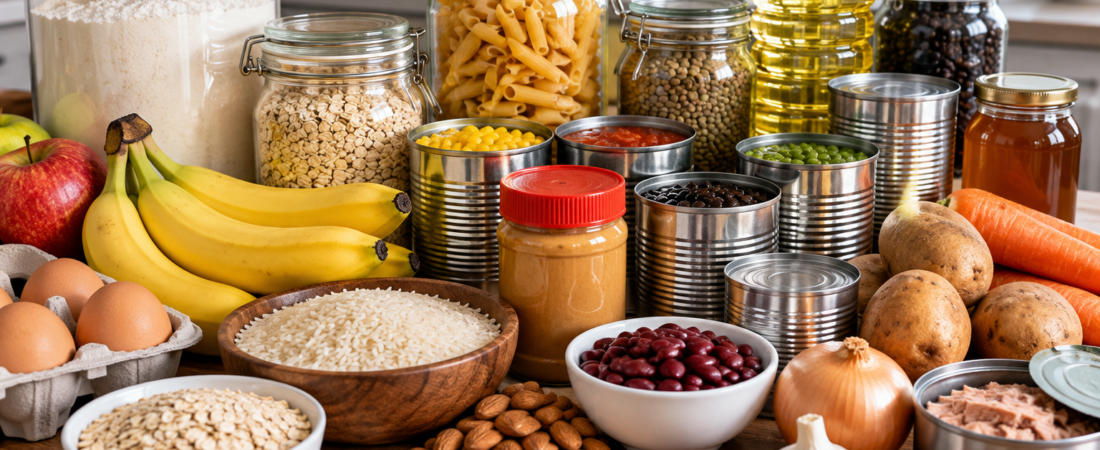
Before spending money on emergency foods, look around your kitchen.
If you decided today that you needed to start building an emergency food supply, you might assume you need to make a special trip to the store and buy cases of specially packaged survival foods.
You may not.
📥 FREE 25 Foods Emergency Pantry Checklist
Building an emergency pantry is easier when you have a shopping list to follow.
Download this free printable checklist to take with you while shopping or use it to organize your pantry.
✔ 25 shelf-stable foods
✔ Printable PDF
✔ Free to download
👉 Download the FREE Emergency Pantry Checklist (PDF)
Take a look inside your pantry, kitchen cabinets, and other food-storage areas first. You may already have many of the foods that can form the foundation of an emergency pantry.
Rice, pasta, oats, canned vegetables, peanut butter, crackers, beans, and other everyday groceries can all have a place in your food supply. Some can provide the foundation for meals, while others add protein, calories, variety, or flavor.
The important thing is to understand what you already have before buying more.
You may also discover that some foods need to be used soon, some need better storage, and others could be combined with foods you already own to create more complete meals.
So before you spend another dollar on emergency food, take a tour of your kitchen.
Here are 25 emergency foods you may already have.
1. Breakfast Foods
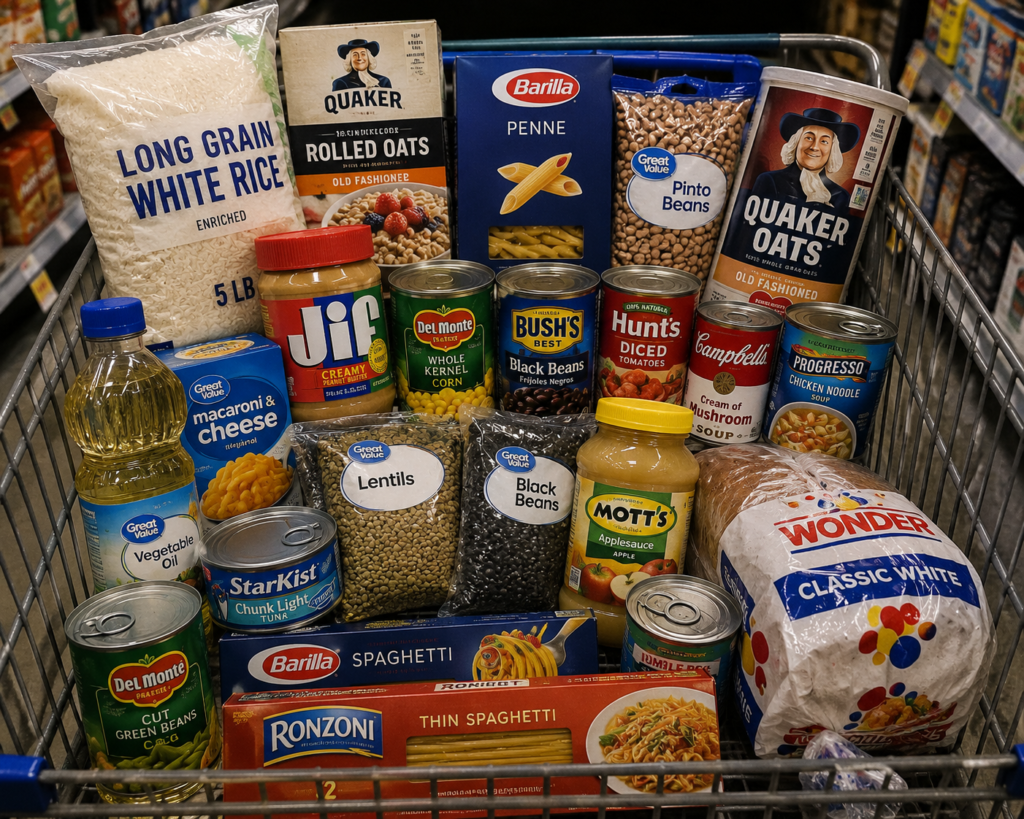
Your breakfast cabinet may contain several foods that can become useful during an emergency.
Breakfast foods are often inexpensive, familiar, and easy to prepare. Some can also be used outside of breakfast, giving you more flexibility when planning meals.
1. Oats
A container of oats can be much more useful than it first appears.
Oats can be prepared with water or milk and combined with sugar, cinnamon, dried fruit, nuts, or peanut butter. They can also be used in baking.
Because they are inexpensive and versatile, oats are worth including when you’re taking inventory of your emergency foods.
2. Pancake Mix
That box of pancake mix in the pantry can become a useful meal during an emergency.
Pancakes provide carbohydrates and can be made into a filling breakfast when you have the necessary ingredients and a way to cook them.
Check the package, however, to determine whether your particular mix requires eggs, milk, oil, or other ingredients.
3. Cereal
Cereal is another everyday food that can serve a second purpose.
Many types can be stored at room temperature and require little preparation. They’re also familiar foods that your family may already enjoy.
The main consideration is milk. If you’re including cereal in an emergency food plan, think about what you would use with it if refrigerated milk wasn’t available.
4. Granola and Breakfast Bars
Granola bars, cereal bars, and similar packaged foods can be convenient when you don’t have time or the ability to prepare a meal.
They can be eaten straight from the package, making them especially useful when cooking isn’t practical.
Check the dates on packages and rotate older bars into your normal meals.
5. Cornmeal and Other Dry Breakfast Ingredients
Cornmeal and other dry ingredients may not seem like emergency foods by themselves, but they can become useful when combined with other pantry staples.
They can give you additional options for making breads, baked foods, or other meals when your normal grocery-shopping routine is disrupted.
2. Pantry Staples
Now move beyond the breakfast cabinet and take a look at the foods that form the backbone of many kitchens.
These everyday staples can be especially valuable because they can be combined in numerous ways.
6. Rice
Rice is one of the foods you may already have that can do a lot of work in an emergency pantry.
It can serve as the foundation for meals and can be combined with beans, vegetables, canned meat, sauces, and seasonings.
If you have white rice stored in your pantry, check how it’s packaged and where it’s being kept. Protecting dry foods from moisture, heat, and pests can help preserve their quality.
7. Pasta
A few boxes of pasta can provide several meal possibilities.
Pasta can be combined with tomato sauce, canned vegetables, beans, canned meat, or seasonings. It can also be prepared in different ways to keep meals from becoming repetitive.
Look at your pantry before buying more. You may already have several meals’ worth.
8. Flour
Flour is another common kitchen staple that can become part of an emergency pantry.
It can be used for bread, biscuits, pancakes, sauces, and other recipes.
The catch is that flour isn’t a complete meal by itself. It requires other ingredients and a method of preparation, so consider it a meal-building ingredient rather than a ready-to-eat emergency food.
9. Dried Beans
Dried beans can provide protein, carbohydrates, and fiber while also being inexpensive and versatile.
They can be combined with rice, vegetables, seasonings, and other pantry ingredients.
One thing to remember is preparation time. Dried beans generally require soaking and cooking, so they are most useful when you have sufficient water and a reliable way to cook them.
10. Potatoes
If you have potatoes in your kitchen, they can provide another source of carbohydrates and can be prepared in numerous ways.
However, fresh potatoes aren’t intended for extremely long storage. Unlike some dry or canned foods, they can eventually spoil.
Use them as part of your shorter-term emergency food supply and rotate them through your normal meals.
3. Canned Foods

Your canned-food cabinet may contain some of the most immediately useful items in your kitchen.
Canned foods can provide protein, vegetables, fruit, and complete meal components without requiring refrigeration while unopened.
Take a look at what you already have before adding another case of cans to your shopping cart.
11. Canned Beans
Canned beans are particularly convenient because they don’t require the lengthy preparation associated with dried beans.
They can be added to rice, pasta, soups, salads, or other dishes.
If your kitchen already has several cans of beans, you may have a ready-made source of emergency meal ingredients.
12. Canned Vegetables
Corn, peas, green beans, carrots, and mixed vegetables can add variety to an emergency pantry.
More importantly, they can help turn basic staples into more complete meals.
A bowl of rice is one thing. Rice combined with beans and vegetables is something much more substantial.
13. Canned Fruit
Canned fruit can provide variety when fresh produce isn’t readily available.
Peaches, pears, pineapple, fruit cocktail, and other canned fruits can be eaten as-is or incorporated into meals and snacks.
Check cans periodically and rotate older products into your regular diet.
14. Canned Meat
Look through your cupboards for tuna, chicken, salmon, and other canned meats.
These products can provide protein and can be combined with many of the staples you probably already have.
For example, canned tuna can be paired with crackers or pasta, while canned chicken can be combined with rice, vegetables, or soup.
15. Canned Soup
Canned soup can serve as either a meal or a meal ingredient.
Depending on the variety, it may already contain vegetables, beans, noodles, or meat.
Soup can also be combined with other pantry foods to stretch a meal and provide additional variety.
4. Snacks
The snack cabinet is another place worth checking.
You may not initially think of snacks as emergency foods, but some can provide convenient calories and require little preparation.
16. Crackers
Crackers can become a useful no-cook food.
They can be eaten alone or combined with peanut butter, canned meat, or other shelf-stable foods.
Because they’re easy to store and require no cooking, they can also be useful when your normal kitchen isn’t fully operational.
17. Peanut Butter
That jar of peanut butter sitting in your cabinet may be one of the more versatile foods you already own.
It can be spread on crackers or bread, mixed into oatmeal, or eaten by itself.
It also provides calories, fat, and protein in a convenient form.
18. Nuts
Almonds, peanuts, walnuts, cashews, and other nuts can provide a convenient snack without requiring preparation.
They’re easy to portion and can also be combined with oats or dried fruit.
Nuts aren’t necessarily a food you should store indefinitely, however. Check dates and rotate them regularly.
19. Dried Fruit
Raisins, dried cranberries, apricots, and similar foods can provide a convenient alternative to fresh fruit.
They can be eaten by themselves or combined with oatmeal, cereal, or nuts.
Look at the packages already in your pantry before purchasing more.
20. Popcorn
Popcorn kernels are another pantry staple that can provide an inexpensive snack.
They require cooking, so they shouldn’t be treated as a no-cook emergency food. But if you have a working heat source, popcorn can provide variety when you’re relying heavily on stored foods.
5. Cooking Ingredients
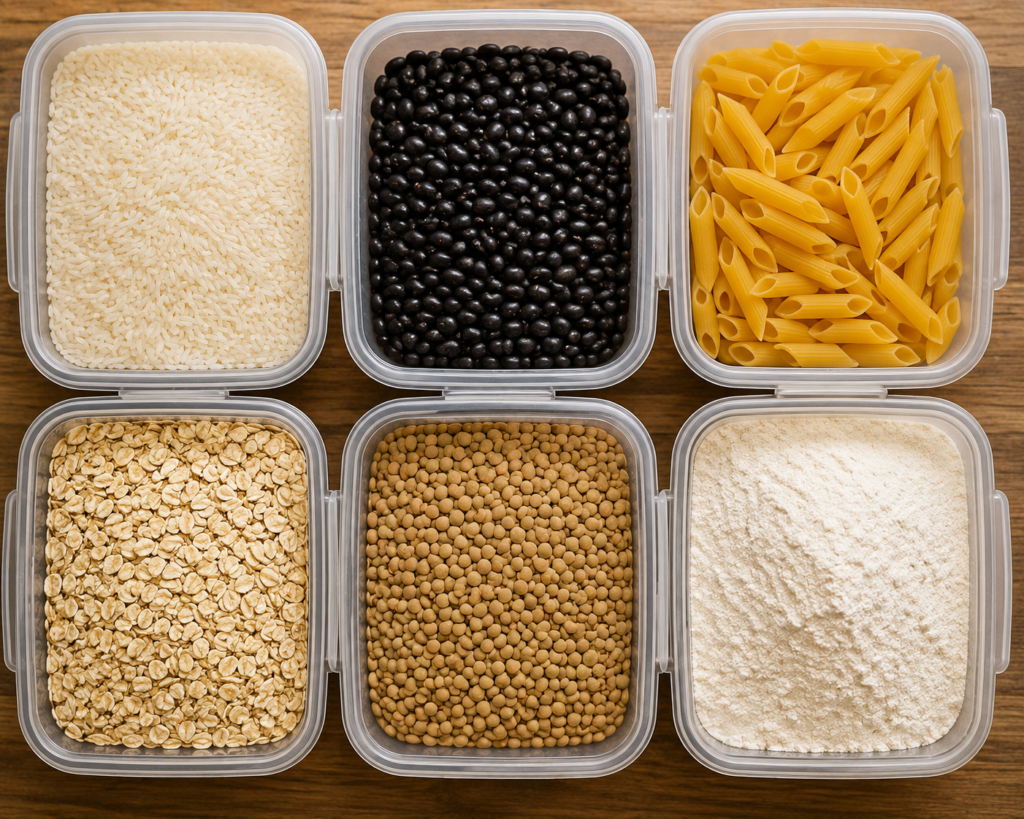
Don’t stop your inventory once you’ve counted the foods you can eat.
Some of the most useful items in an emergency pantry are ingredients that help turn basic foods into meals.
21. Salt
Salt may seem insignificant compared with a bag of rice or a case of canned vegetables.
But when you’re preparing simple foods repeatedly, seasoning becomes important.
A small amount of salt can make otherwise bland meals considerably more enjoyable.
22. Sugar
Sugar can be used in oatmeal, baking, beverages, sauces, and many other recipes.
If you already keep a bag or container of sugar in your pantry, include it in your inventory rather than automatically buying another one.
23. Cooking Oil
Cooking oil is an important ingredient for frying, baking, and preparing many common foods.
Check the type of oil you have and its best-by date. Oils generally don’t have the same storage characteristics as dry staples such as rice or pasta.
24. Spices and Seasonings
Look through your spice rack.
Garlic powder, onion powder, black pepper, chili powder, cinnamon, Italian seasoning, paprika, and other spices can make a surprisingly big difference when preparing simple pantry meals.
Having several seasonings also allows you to prepare familiar ingredients in different ways.
25. Bouillon and Broth
Bouillon cubes, granules, and shelf-stable broth can help transform basic ingredients into soups, rice dishes, beans, and other meals.
They’re especially useful because a small amount can add considerable flavor to foods that might otherwise become repetitive.
The “Look Before You Buy” Checklist
Now that you’ve gone through your kitchen, don’t immediately start shopping.
First, make a simple inventory.
What Do You Already Have?
Write down the foods you already own.
Don’t worry about having the perfect emergency pantry.
You may discover that you already have:
- Several bags or boxes of rice
- Pasta
- Oats
- Canned vegetables
- Canned beans
- Tuna or other canned meat
- Peanut butter
- Crackers
- Nuts
- Cooking oil
- Seasonings
Those foods can form the beginning of an emergency pantry.
What Needs to Be Used First?
Next, look at dates and condition.
Which foods have been sitting in the pantry the longest?
Which packages are already open?
Which foods are approaching their best-by dates?
Move older foods toward the front and incorporate them into your regular meals.
The best emergency pantry is one that gets used and replenished—not one where food is forgotten for years.
What Needs Better Storage?
Finally, examine how your food is stored.
Are dry foods exposed to moisture?
Are some packages damaged?
Are foods being stored in an area that gets unusually hot?
Are there signs of insects or other pests?
Correcting storage problems may be more important than buying additional food.
Build From What You Own
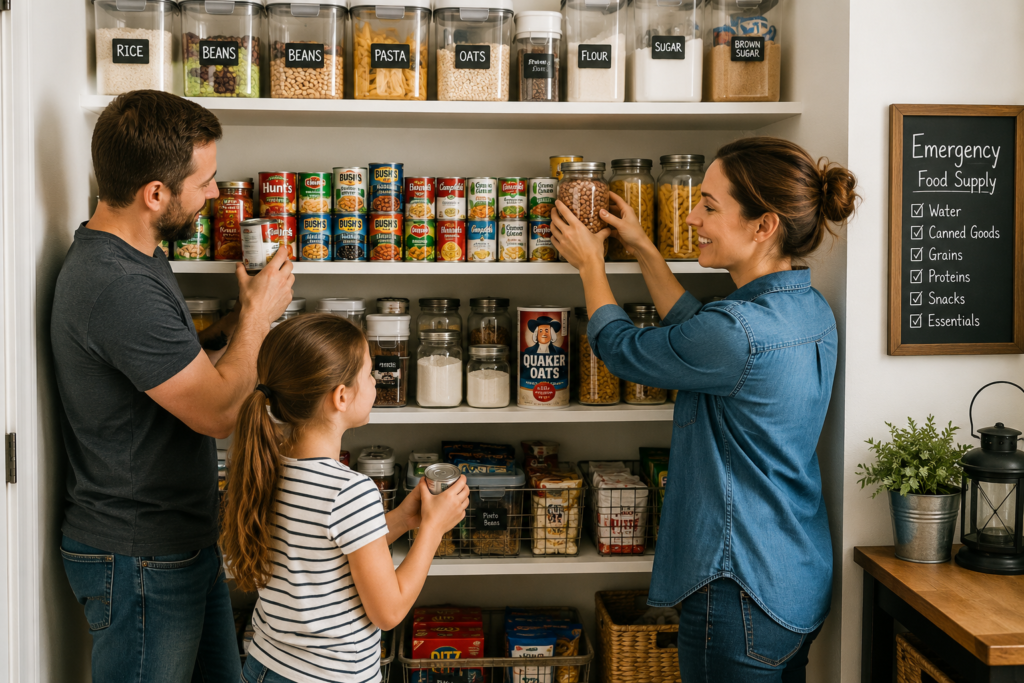
Once you’ve completed your inventory, look for the gaps.
Don’t think of your emergency pantry as a collection of individual foods.
Think of it as a collection of potential meals.
For example, rice by itself isn’t much of a meal. But rice combined with beans, canned vegetables, and seasonings gives you considerably more possibilities.
Pasta becomes more useful when you have sauce, vegetables, canned meat, or seasonings to accompany it.
Oats become more versatile with sugar, cinnamon, dried fruit, nuts, or peanut butter.
Crackers become more useful when you have peanut butter or canned meat.
This approach can help you get more value from the food you already own.
Instead of asking, “What emergency foods should I buy?”
Start asking:
“What meals can I make from what I already have?”
Then identify what’s missing.
Perhaps you need more protein. Maybe you need additional no-cook foods. You might discover that you have plenty of rice and pasta but very few vegetables.
Those gaps give you a much more useful shopping list.
Recommended Resource: The Lost Super Foods
If you’re building a long-term emergency food supply, it’s worth learning about the foods our grandparents and earlier generations relied on before modern refrigeration and grocery stores became common.
The Lost Super Foods is a guide that explores forgotten preservation methods, shelf-stable foods, and traditional survival recipes that helped families thrive during difficult times. The guide includes practical information on food storage, preservation techniques, and nutrient-dense foods that can complement a well-stocked emergency pantry.
Whether you’re just starting your preparedness journey or looking to expand your food storage knowledge, this resource may provide valuable insights for creating a more resilient pantry.
👉 Click here to learn more about The Lost Super Foods.
Your Emergency Pantry May Already Be Started
Building an emergency food supply doesn’t have to start with a shopping cart full of expensive survival foods.
It can begin with opening your pantry door.
The rice you already own, the cans sitting in the cupboard, the peanut butter in the cabinet, and the boxes of pasta you’ve been meaning to use can all become pieces of a larger emergency food supply.
The key is to take inventory, rotate what you have, store it properly, and gradually fill the gaps.
You don’t need to build everything at once.
Start with what you own.
Then build from there.
Before buying more emergency food, look around your kitchen. You may already have the beginnings of the emergency pantry you’re trying to create.
Related Articles
Want to build a stronger emergency pantry? These guides will help:
The Complete Beginner,s Guide To Emergency Food Storage