When the power goes out, one of the first things many families discover is make how to make emergency meals. Having plenty of food doesn’t necessarily mean having a way to prepare it. Your refrigerator may stop working. Your electric stove won’t heat. The microwave is useless without electricity. Even foods you normally consider simple can suddenly require more preparation than you expected.
That’s why a practical emergency food supply should include meals that can be prepared without using your stove.
The good news is that you don’t have to survive on crackers and peanut butter.
Affiliate Disclosure: This post may contain affiliate links. I may earn a commission at no extra cost to you.
With the right combination of shelf-stable ingredients, canned foods, no-cook proteins, and a little planning, you can put together filling and reasonably varied meals without turning on your stove.
The simplest way to make emergency meals begins with foods that don’t require cooking, heating, or complicated preparation.
Good options include:
- Canned beans
- Canned tuna or chicken
- Peanut butter
- Crackers
- Nuts
- Dried fruit
- Ready-to-eat canned vegetables
- Canned fruit
- Shelf-stable meat
- Granola bars
- Ready-to-eat meals
- Shelf-stable milkhttps://pantryreadyliving.com/no-cook-emergency-foods-the-best-foods-you-can-eat-without-electricity-or-cooking/
These foods can be combined in different ways to create meals instead of simply eating individual ingredients.
For example, crackers and canned chicken can become a simple lunch. Add canned vegetables or fruit and you’ve created a more complete meal.
The key is to stock ingredients that work together.
Build Meals Around Three Components

A useful way to create no-cook emergency meals is to think in three parts:
Protein + carbohydrate + fruit or vegetable
This simple formula can keep you from building an emergency pantry that’s heavy on snacks but light on actual meals.
For example:
Canned chicken + crackers + canned fruit
Peanut butter + crackers + dried fruit
Canned beans + tortillas + canned vegetables
Tuna + crackers + canned green beans
You don’t need elaborate recipes.
You need combinations that provide enough variety to keep meals from becoming repetitive.
No-Cook Breakfast Ideas
Breakfast can actually be one of the easiest meals to handle without a stove.
Peanut Butter and Crackers
Pair peanut butter with crackers and add dried fruit for something quick and filling.
Cereal and Shelf-Stable Milk
Shelf-stable milk can be stored without refrigeration until opened, making it useful during a power outage.
Choose cereal your family already enjoys rather than buying something unfamiliar just because it has a long shelf life.
Oatmeal Without Cooking
Traditional oatmeal normally requires hot water, but some types of oats can be prepared by soaking them in water or shelf-stable milk.
If you plan to use this method, test it beforehand.
An emergency isn’t the time to discover that your preferred oatmeal doesn’t work well without cooking.
Breakfast Bars
Granola or breakfast bars can provide an extremely simple option when cooking and cleanup aren’t practical.
Keep several varieties available if your family has different preferences.
No-Cook Lunch Ideas
Lunch can be built around canned proteins and simple shelf-stable sides.
Chicken and Crackers
Combine canned chicken with crackers and a side of canned fruit or vegetables.
Tuna and Crackers
Tuna packets or cans can provide another easy protein option.
Peanut Butter and Crackers
It’s basic, but it’s practical and requires no refrigeration before opening.
Bean and Tortilla Wraps
If your family enjoys tortillas, combine ready-to-eat beans with tortillas and shelf-stable toppings.
You can add canned vegetables or salsa if you have them.
Emergency Snack Plate
A simple plate of crackers, nuts, dried fruit, canned meat, and shelf-stable cheese or another suitable protein can provide variety without cooking.
Think of it as an emergency version of a snack board.
No-Cook Dinner Ideas
Dinner is where many emergency food supplies fall short.
People often store rice, pasta, dried beans, and other foods that require cooking.
Those foods can be excellent to have, but they don’t solve the problem if you can’t use your stove.
Instead, make sure your pantry contains some foods that can become dinner straight from the package.
Chicken and Vegetable Plate
Combine canned chicken with canned vegetables and crackers.
Add seasoning, hot sauce, or another shelf-stable condiment for additional flavor.
Bean and Corn Bowl
Use ready-to-eat canned beans and corn.
Add salsa, seasoning, or another shelf-stable topping if available.
You can eat the mixture cold or warm it using another safe cooking method if one is available.
Tuna and Crackers
Tuna, crackers, canned vegetables, and fruit can make a surprisingly complete emergency meal.
Ready-to-Eat Soup
Some canned soups can be eaten without heating, although they may be much more enjoyable warm.
If you’re relying on canned soup during a no-cook emergency, choose varieties that your family is comfortable eating cold or make sure you have a safe alternative heating method.
A Short Story: The Emergency Pantry That Needed a Can Opener
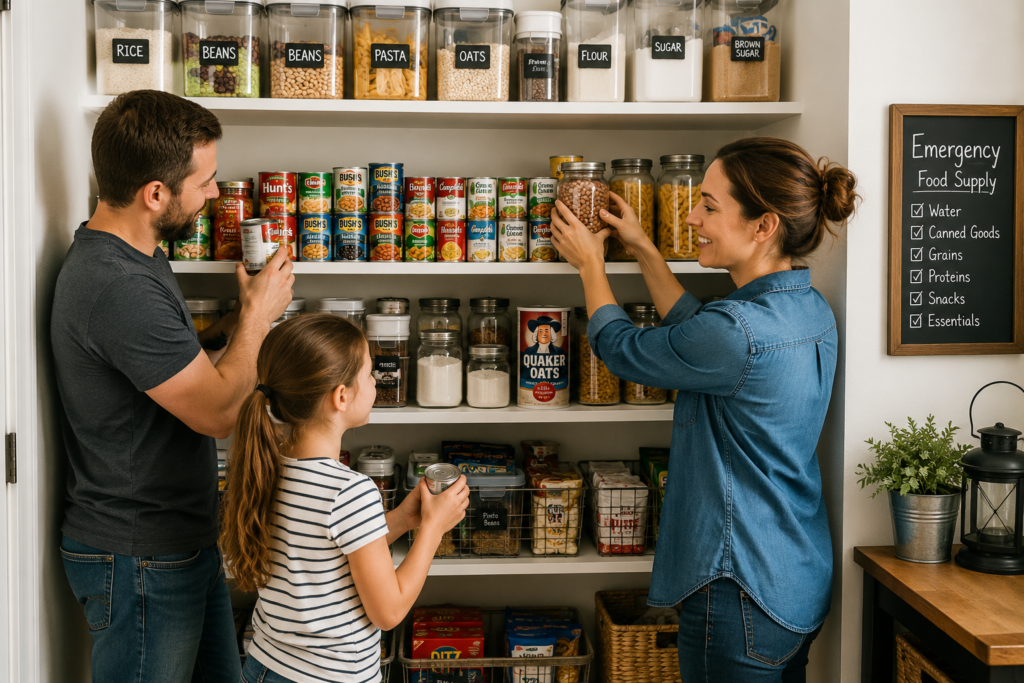
Imagine a family that has spent months building an emergency pantry.
They have canned chicken, beans, vegetables, fruit, soup, and several other foods.
Then a winter storm knocks out their electricity.
When dinner time arrives, they discover something surprisingly simple: the manual can opener is in the kitchen drawer, but they can’t find it.
They eventually locate one, but the experience teaches them an important lesson.
Emergency preparation isn’t just about buying food.
It’s about making sure the food can actually be accessed and eaten.
A manual can opener costs very little and takes almost no storage space.
It belongs with your emergency supplies.
Don’t Forget Condiments and Seasonings
One reason emergency meals become boring so quickly is that people focus almost entirely on the main ingredients.
A few small additions can make the same basic foods taste completely different.
Consider keeping shelf-stable versions of:
- Salt
- Pepper
- Hot sauce
- Mustard
- Mayonnaise packets
- Soy sauce
- Relish
- Salsa
- Seasoning blends
You don’t need dozens of condiments.
Choose a few that your household already uses.
A packet of hot sauce can make canned beans taste very different from the previous meal.
Use Tortillas, Crackers and Bread Alternatives
Carbohydrates give you another way to turn canned foods into meals.
Crackers are particularly useful because they require no preparation.
Tortillas can also be versatile when properly stored.
Depending on your storage conditions and the type of product, shelf-stable flatbreads or other bread alternatives may provide additional options.
The important thing is to avoid relying entirely on one carbohydrate.
If your family becomes tired of crackers after several meals, having tortillas, bars, cereal, or another alternative can make the emergency food supply feel much less repetitive.
What About Rice, Pasta and Beans?
You don’t have to eliminate foods that require cooking.
Rice, pasta, dry beans, and other staples can still be valuable parts of a long-term emergency food supply.
The mistake is making them your only plan.
Think of your emergency pantry as having two levels:
No-Cook Foods
These are your immediate backup foods when electricity, fuel, or cooking equipment isn’t available.
Cooked Foods
These are your longer-term ingredients when you have a safe way to prepare them.
This gives you flexibility.
During the first day of a power outage, you may rely heavily on no-cook foods.
If you later have access to a safe cooking method, you can transition to rice, pasta, beans, oatmeal, and other ingredients.
Don’t Forget Water
Some foods seem simple until you realize they require water.
Dry beans need water.
Rice needs water.
Pasta needs water.
Dehydrated foods need water.
If your emergency situation also affects your water supply, these foods become harder to prepare.
That’s why your emergency pantry should include a combination of foods that:
- Require no water
- Require little water
- Require significant water
No-cook foods are particularly valuable when water is limited.
And remember that drinking water should be planned separately from the water needed for food preparation and sanitation.
Have a Safe Backup Heating Method
“No stove” doesn’t necessarily mean “no hot food.”
Depending on your circumstances, you may have another safe way to heat food.
However, safety comes first.
Never bring a fuel-burning grill, camp stove, charcoal appliance, or similar equipment indoors unless it is specifically designed and approved for indoor use.
Carbon monoxide can build up quickly and become deadly.
If you use an alternative cooking method, understand how it works before an emergency occurs.
Practice using it safely and follow the manufacturer’s instructions.
Build a Three-Day No-Cook Menu
One of the best ways to test your emergency pantry is to create an actual menu.
For example:
Day 1
Breakfast: Cereal with shelf-stable milk and dried fruit
Lunch: Tuna, crackers, and canned fruit
Dinner: Chicken, canned vegetables, and crackers
Day 2
Breakfast: Peanut butter, crackers, and dried fruit
Lunch: Beans, tortillas, and salsa
Dinner: Tuna, crackers, canned vegetables, and fruit
Day 3
Breakfast: Breakfast bars and shelf-stable milk
Lunch: Chicken, crackers, and canned fruit
Dinner: Bean and corn mixture with tortillas and salsa
The exact menu doesn’t matter as much as the exercise.
If you can’t create three days of meals from your emergency supplies, you have identified a gap that can be fixed before you actually need the food.
A Second Story: The Meal Nobody Wanted
One family once planned its emergency meals around foods that looked excellent on paper.
There were beans, canned vegetables, rice, pasta, and several other staples.
But during a practice weekend, the children quickly became tired of the same combinations.
The parents realized they had planned for survival, but not for satisfaction.
They added familiar foods afterward—peanut butter, crackers, fruit, breakfast bars, and a few favorite seasonings.
The supply didn’t become dramatically larger.
It simply became more usable.
That’s an important lesson.
An emergency food supply should provide nutrition, but familiarity and variety matter too.
Create a Dedicated No-Cook Emergency Box
If you have limited storage space, consider putting your most important no-cook supplies together in one clearly labeled container.
It could contain:
- Manual can opener
- Crackers
- Peanut butter
- Bars
- Nuts
- Dried fruit
- Ready-to-eat canned foods
- Shelf-stable utensils
- Napkins
- Seasonings
- Small condiment packets
The contents will depend on your household.
The advantage is that you won’t have to search through the entire pantry when the power goes out.
Final Thoughts
You don’t need a working stove to make emergency meals.
The key is to build your food supply around ingredients that can be eaten together without cooking.
Stock a combination of proteins, carbohydrates, fruits, vegetables, snacks, and flavorings. Include enough no-cook foods to get through the early part of an emergency, while keeping longer-term staples such as rice, pasta, and beans for situations when safe cooking becomes available.
Most importantly, test your plan before you need it.
Try eating a few no-cook meals with your family. See what everyone likes. Find out which foods require water. Make sure you have a manual can opener and any other basic supplies you’ll need.
A pantry full of food isn’t necessarily an emergency food plan.
A pantry filled with meals you can actually prepare and eat when the stove doesn’t work is much more useful.
FREE 25 Foods Emergency Pantry Checklist
Building an emergency pantry is easier with a shopping list to follow.
Download this free printable checklist to take with you while shopping or use it to organize your pantry.
✔ 25 shelf-stable foods
✔ Printable PDF
✔ Free to download