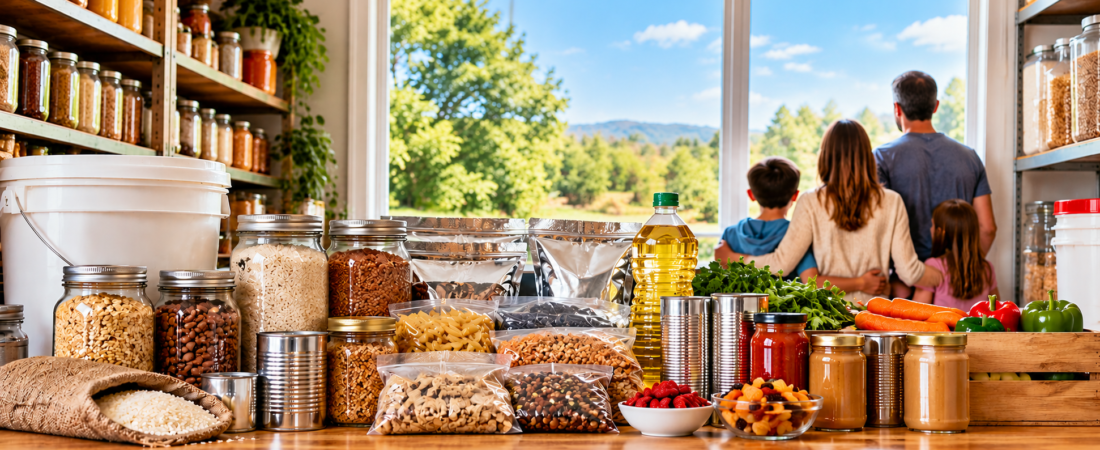
Building an emergency food supply for a family of 4 can seem overwhelming.
How much food do you actually need? What should you buy first? How much water should you store? And where are you supposed to put everything?
The good news is that you don’t have to buy hundreds of cans or fill an entire basement in one weekend.
A better approach is to build your emergency food supply around time, people, meals, and available storage space.
Start with a realistic goal, build gradually, and choose foods your family already eats. That makes your emergency supply easier to afford, easier to rotate, and much more likely to be useful when you actually need.
Affiliate Disclosure: This post may contain affiliate links. I may earn a commission at no extra cost to you.
Before buying food, decide how long you want your supply to last.
A three-day emergency supply is a reasonable starting point for many households. Once you’ve established that, you can gradually work toward a seven-day supply and, if your budget and storage space allow, a longer-term reserve.
For a family of four, the difference between these goals is significant.
| Emergency Period | People | Food Planning |
|---|---|---|
| 3 days | 4 | 12 person-days of food |
| 7 days | 4 | 28 person-days of food |
| 14 days | 4 | 56 person-days of food |
| 30 days | 4 | 120 person-days of food |
You don’t necessarily need to think of this as 120 completely separate meals.
Instead, think about building enough ingredients to create breakfasts, lunches, dinners, and snacks for the household.
Start with three days if you’re beginning from scratch.
Plan for Meals, Not Just Food Containers
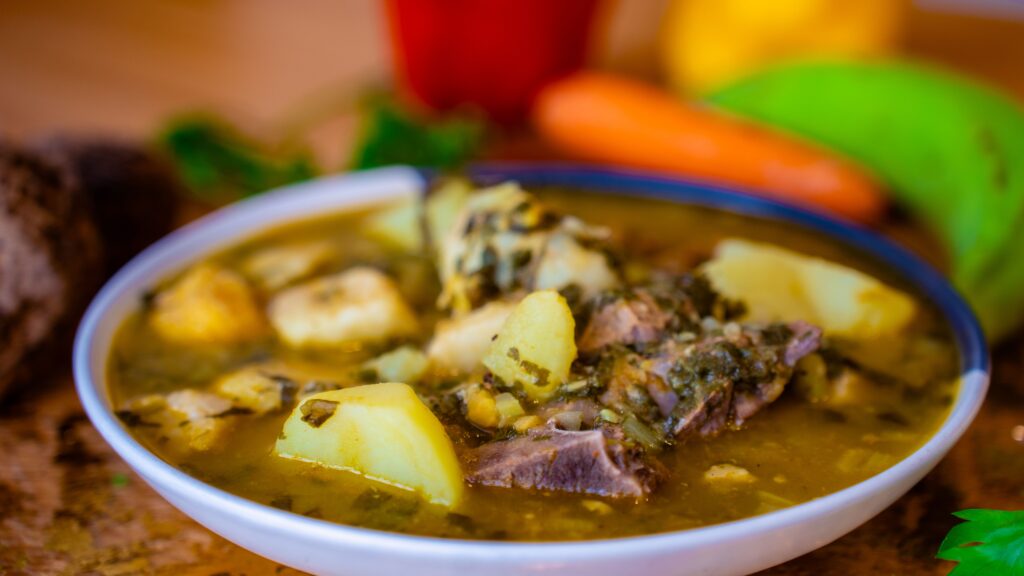
One of the biggest mistakes people make is buying food simply because it has a long shelf life.
A pantry full of individual ingredients isn’t necessarily an emergency food supply.
Your family still needs meals.
For example, rice by itself isn’t a complete meal. But rice combined with beans, canned vegetables, seasonings, and a shelf-stable protein can become several different meals.
Try to build around basic meal categories.
Breakfast
Consider foods such as:
- Oats
- Shelf-stable milk
- Cereal
- Peanut butter
- Dried fruit
- Breakfast bars
Lunch
Simple combinations can include:
- Crackers and canned meat
- Peanut butter and crackers
- Beans and rice
- Canned soup
- Ready-to-eat meals
Dinner
Build meals around combinations such as:
- Rice and beans
- Pasta and sauce
- Canned vegetables and protein
- Shelf-stable soups
- Potatoes and canned meat
Snacks
Don’t overlook snacks.
Nuts, dried fruit, crackers, peanut butter, granola bars, and other familiar foods can add variety and make an emergency food supply easier for a family to live with.
A Family of Four Doesn’t Eat Like Four Individuals
When planning for four people, don’t simply multiply a single person’s food list by four.
Think about how your household actually eats.
One person may eat more than another. Children may prefer completely different foods from adults. Someone may need a particular type of food because of an allergy or dietary restriction.
For that reason, your emergency food supply should be based on your family’s eating habits, not a generic shopping list.
Take a normal week and write down the meals your household actually enjoys.
Then ask:
Which of these meals could be made from shelf-stable ingredients?
That simple exercise can give you a much better starting point than buying a random collection of emergency foods.
A Simple Story: The Pantry That Looked Bigger Than It Was

Imagine a family of four that decides to prepare for a week-long emergency.
At first, they buy whatever catches their attention: canned vegetables, rice, pasta, canned soup, crackers, beans, cereal and several other items.
After a few shopping trips, the pantry looks impressive.
But when they try to plan seven days of meals, they discover a problem.
They have plenty of individual foods but very few complete meal combinations.
The next time they shop, they change their approach.
Instead of asking, “What else should we buy?” they ask, “What meal can this ingredient help us make?”
That small change transforms their pantry.
They aren’t simply accumulating food anymore.
They’re building meals.
Choose Foods Your Family Already Eats
An emergency isn’t the best time to discover that nobody likes the food you’ve stored.
Before buying large quantities, look at your family’s normal meals.
What do you already eat?
If your family regularly eats pasta, rice, beans, oatmeal, canned vegetables, peanut butter, or soups, those foods can form the foundation of your emergency supply.
Familiar foods also make meal planning easier.
You can create emergency versions of meals your family already knows.
This is especially important when children are involved. A shelf full of unfamiliar “survival foods” may look impressive, but it isn’t necessarily practical.
Store what you eat, and eat what you store.
Build Around Versatile Ingredients
For a family of four, versatility is especially important because storage space can disappear quickly.
Look for ingredients that can be used in several different meals.
Rice
Rice can become a base for beans, vegetables, meat, or other ingredients.
Pasta
Pasta can be combined with different sauces, canned vegetables, and proteins.
Beans
Beans provide a useful source of protein and can be used in soups, rice dishes, chili-style meals, and other combinations.
Canned Vegetables
Vegetables add variety and can turn basic staples into more complete meals.
Canned or Shelf-Stable Proteins
Depending on your family’s preferences, options may include canned meat, fish, beans, peanut butter, or other shelf-stable protein sources.
Oats
Oats provide a simple breakfast and can be combined with several shelf-stable ingredients.
The objective is to create many meals from a manageable number of ingredients.
Don’t Forget No-Cook Foods
A family emergency supply should include foods that can be eaten without cooking.
A power outage can make electric stoves, microwaves, toaster ovens, and air fryers unavailable.
Some useful options include:
- Peanut butter
- Crackers
- Nuts
- Dried fruit
- Ready-to-eat canned foods
- Granola bars
- Shelf-stable beverages
- Ready-to-eat meals
Keep a manual can opener with your emergency supplies.
A pantry full of canned food isn’t particularly useful if you can’t open the cans.
Plan Your Water Supply
Food is only part of the equation.
A family of four also needs water.
A commonly used emergency-planning guideline is at least one gallon of water per person per day for drinking and sanitation.
For four people, that works out to:
- 4 gallons per day
- 12 gallons for 3 days
- 28 gallons for 7 days
- 56 gallons for 14 days
- 120 gallons for 30 days
That’s a substantial amount of water.
If you don’t have the space to store a large supply immediately, start with a realistic amount and build gradually.
Also remember that some emergency foods require water for preparation.
Dry beans, rice, pasta, oatmeal, and dehydrated foods can require additional water.
So when planning your food supply, ask not only:
“How long will this food last?”
Also ask:
“How much water will I need to prepare it?”
Consider Your Cooking Situation
A family of four may have completely different needs depending on whether cooking is available.
If you’re dealing with a power outage, your electric stove, microwave, toaster oven, or air fryer may not work.
Consider having an emergency cooking method that you know how to use safely and that is appropriate for the location where it will be used.
Never use fuel-burning cooking equipment indoors unless it is specifically designed and approved for indoor use.
Your food supply should match your cooking capabilities.
If you have limited cooking options, increase the proportion of foods that can be eaten without cooking.
Don’t Forget Special Dietary Needs
A family of four doesn’t necessarily mean four identical diets.
Someone may have a food allergy, dietary restriction, or strong food preferences.
Take those needs into account before building your supply.
Make a list of foods that each family member can safely eat.
Then identify emergency substitutes for foods that may be difficult to obtain during a disruption.
This prevents you from discovering during an emergency that a large portion of your stored food isn’t suitable for someone in the household.
A Simple Story: The Seven-Day Test
One family decided they had enough emergency food because their pantry was packed with canned goods and dry staples.
Instead of waiting for an emergency to find out, they conducted a weekend test.
For several days, they tried preparing meals using only the foods they had designated as their emergency supply.
They quickly discovered two problems.
They didn’t have enough foods the children liked, and several of their planned meals required ingredients that weren’t actually part of their emergency storage.
They adjusted their supply afterward.
The test didn’t use an emergency to teach them what was missing.
It taught them before they needed it.
That’s one of the most valuable things you can do with an emergency food supply.
Store Your Food Where You Can Actually Reach It
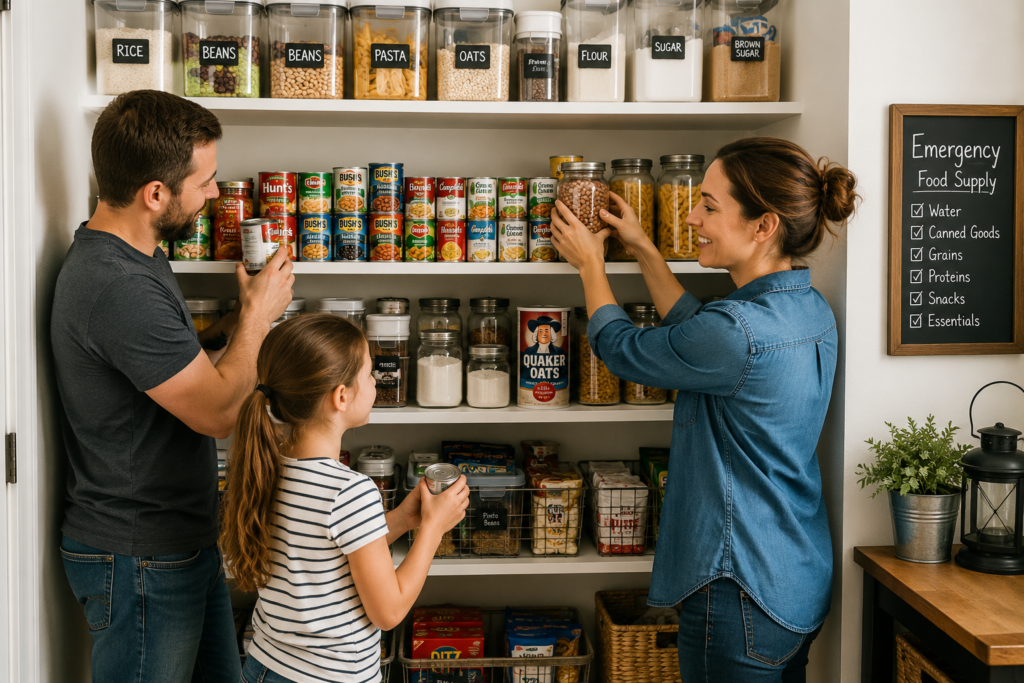
You don’t need a dedicated emergency-food room.
Use appropriate storage areas such as:
- Pantry shelves
- Kitchen cabinets
- Closet shelves
- A utility area
- Under-bed storage
- Sturdy shelving
Keep food in a cool, dry location and protect it from pests.
Remember that canned goods and water are heavy.
Don’t overload shelves that aren’t designed to support the weight.
If space is extremely limited, focus on foods that provide multiple meal possibilities rather than buying large quantities of single-purpose products.
Rotate Your Emergency Food
Don’t put your emergency food away and forget about it.
Use a simple first-in, first-out system.
When you buy a new package of pasta, rice, canned vegetables, or another shelf-stable food, place the newer item behind the older one.
Use the older product first.
Then replace it.
This turns your emergency supply into part of your normal grocery system instead of creating a second pantry that eventually gets forgotten.
It also allows your family to discover which foods they actually enjoy.
Build the Supply Gradually
You don’t need to spend hundreds of dollars immediately.
Build the supply in stages.
Stage 1: Three Days
Start with enough food and water for four people for three days.
Focus on foods you already eat and include some no-cook options.
Stage 2: One Week
Once your three-day supply is established, expand it to seven days.
Add variety rather than simply buying more of the same food.
Stage 3: Two Weeks
Begin increasing your supply of versatile staples and meal ingredients.
Evaluate your water-storage capacity at the same time.
Stage 4: Longer-Term Reserve
If you have sufficient space and want additional preparedness, continue building toward a 30-day supply.
There’s no need to rush.
A Simple Family-of-Four Checklist
Before considering your emergency food supply complete, ask:
- Do we have at least three days of food?
- Do we have a plan for extending that supply?
- Do we have drinking water?
- Do we have foods that require no cooking?
- Do we have a manual can opener?
- Do we have foods everyone in the household can eat?
- Do we have a way to prepare foods that require cooking?
- Are our supplies stored in an appropriate location?
- Are we rotating older food first?
- Could we make several different meals from what we have?
If you can answer yes to most of these questions, you’re building a practical emergency food system rather than simply accumulating food.
Final Thoughts
Building an emergency food supply for a family of four doesn’t have to happen all at once.
Start with three days.
Choose familiar foods.
Build meals rather than simply collecting containers.
Add no-cook options, plan for water, consider your cooking situation, and account for each family member’s needs.
Then gradually expand from three days to one week, two weeks, and eventually longer if that’s appropriate for your household.
The goal isn’t to create the largest stockpile possible.
It’s to create a reliable, practical food supply that your family can actually use when normal grocery shopping, cooking, or utilities aren’t available.
Start with three days. Build from there.
The goal isn’tDon’t guess what you need or wait until an emergency exposes the gaps in your food supply.
Ready to Start Building Your Emergency Pantry?
Don’t guess what you need or wait until an emergency exposes the gaps in your food supply.
FREE 25 Foods Emergency Pantry Checklist
Building an emergency pantry is easier when you have a shopping list to follow.
Download this free printable checklist to take with you while shopping or use it to organize your pantry.
✔ 25 shelf-stable foods
✔ Printable PDF
✔ Free to download
👉 Download the https://pantryreadyliving.com/is-your-survival-pantry-prepared/FREE Emergency Pantry Checklist (PDF)
Related Articles
For more w Howhttps://pantryreadyliving.com/how-to-build-a-30-day-emergency-food-supply/ To Build A 30-Day Emergency Food Supplyays to build and manage your emergency food supply, see these related articles.
Is Your Survival Pantry Prepared?