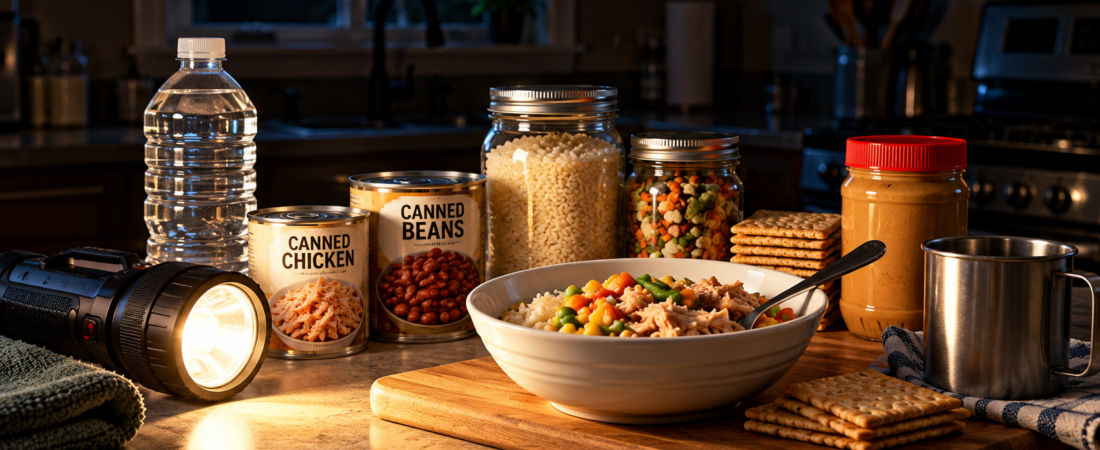
A power outage can turn a well-stocked kitchen into a food-safety problem surprisingly quickly.
When the power goes out, your refrigerator and freezer stop working. The longer the outage lasts, the more important it is to know which foods to eat first, which can wait, and which to discard.
Affiliate Disclosure: This post may contain affiliate links. I may earn a commission at no extra cost to you.
The good news is that a power outage doesn’t automatically mean losing all the food in your refrigerator and freezer. With a little preparation and some quick decisions, you can protect much of your food supply and rely on your pantry while the power is off.
Here’s what to do.
Power Outage Food Safety: At a Glance
The first few hours are important. Knowing roughly when to take action can help you protect your food and avoid unnecessary waste.
| Time Without Power | What to Do | Food Priority |
|---|---|---|
| 0–1 hour | Keep refrigerator and freezer doors closed. Check whether the outage is expected to be brief. | Leave refrigerated and frozen foods where they are. |
| 1–4 hours | Continue keeping the refrigerator closed. Prepare to use a cooler if necessary. | Prioritize foods that were already close to their normal storage limits. |
| Around 4 hours | A closed refrigerator may no longer be able to keep perishable food safely cold. | Begin evaluating refrigerated foods using temperature information. |
| 4–24 hours | If the outage continues, rely more heavily on shelf-stable foods. | Use canned, dry, and ready-to-eat pantry foods. |
| 24–48 hours | A full freezer can often remain cold for about 48 hours if kept closed; a half-full freezer may last about 24 hours. | Check frozen foods for ice crystals and temperature before deciding what to keep. |
| After 48 hours | Carefully evaluate remaining frozen food based on temperature and food-safety guidance. | When food has been exposed to unsafe temperatures for too long, discard it. |
| Any time | When in doubt about a perishable food’s safety, don’t taste it to test it. | When uncertain, throw it out. |
Important: These are general guidelines, not guarantees. Actual conditions depend on factors such as appliance temperature, how full the refrigerator or freezer is, how often the doors are opened, and the surrounding temperature. A refrigerator/freezer thermometer is one of the most useful tools for determining whether food has remained at a safe temperature.
FREE 25 Foods Emergency Pantry Checklist
Building an emergency pantry is easier with a shopping list to follow.
Download this free printable checklist to take with you while shopping or use it to organize your pantry.
✔ 25 shelf-stable foods
✔ Printable PDF
✔ Free to download
👉 Download the FREE Emergency Pantry Checklist (PDF)
What to Do During the First Hour

The most important thing you can do when the power goes out is surprisingly simple:
Keep the refrigerator and freezer doors closed.
Every time you open the door, cold air escapes and warmer air enters. That can shorten the amount of time your food remains safely chilled.
If the outage appears to be brief, resist the temptation to repeatedly check the refrigerator. Instead, determine whether the outage is widespread and whether your utility company has provided an estimated restoration time.
If you have appliance thermometers, check the temperatures when practical. A refrigerator should generally be kept at or below 40°F, while a properly operating freezer should be at 0°F.
If you don’t already have thermometers, they’re inexpensive tools worth keeping with your emergency supplies.
You should also identify alternative food sources you can use if the outage continues:
- Shelf-stable pantry foods
- Canned foods
- Ready-to-eat foods
- Foods that don’t require refrigeration
- Stored drinking water
The less you open your refrigerator and freezer, the better your chances of preserving what is inside.
How Long Does Food Actually Stay Safe?
One of the biggest questions during a power outage is how long refrigerated and frozen foods will remain safe.
A closed refrigerator can generally keep food cold for about 4 hours during a power outage. A fully stocked freezer can typically remain cold for about 48 hours, while a freezer that is only half full may maintain its temperature for roughly 24 hours, provided the doors remain closed.
These are general guidelines rather than guarantees.
The actual situation depends on factors such as:
- How full the appliance is
- The temperature before the outage
- The temperature of the surrounding room
- How often the door is opened
- Whether additional ice or cold sources are being used
- How long the outage actually lasts
That’s why a thermometer is so useful.
If you have reliable temperature information, you can make a much better decision about whether food can be safely kept.
What About Food in the Freezer?
Frozen food can sometimes be saved even after an extended outage.
If food still contains ice crystals or has remained at 40°F or below, it may be possible to refreeze or cook it, depending on the circumstances.
However, don’t rely solely on appearance. Use temperature information whenever possible and follow current food-safety guidance.
A freezer that remains closed is much more likely to protect its contents than one that is opened repeatedly.
Foods to Eat First
If the outage is expected to last longer than a few hours, start thinking strategically about what you eat.
Your goal isn’t necessarily to empty the refrigerator immediately. Instead, prioritize foods that are most vulnerable to warming.
Consider using:
Leftovers
Cooked leftovers generally have a limited refrigerated shelf life even under normal circumstances.
If they’re already several days old when the outage occurs, they should receive priority.
Don’t assume that reheating questionable leftovers will make them safe.
Dairy Products
Milk, cream, soft cheeses and other refrigerated dairy products can become problematic as temperatures rise.
If you have a cooler and sufficient ice, transferring vulnerable refrigerated foods can help maintain a safe temperature.
Meat and Seafood
Raw meat, poultry and seafood are among the foods that require careful temperature control.
If you’re going to cook them, make sure they’ve remained at a safe temperature.
Don’t assume cooking will make improperly stored food safe.
Eggs
Eggs should remain refrigerated according to the storage practices used in your household and region.
If their temperature history becomes uncertain, take a conservative approach.
Cut Fruits and Vegetables
Whole fruits and many whole vegetables can tolerate room temperature better than cut produce.
Cut produce, however, is generally more perishable and should be treated accordingly.
Foods You Shouldn’t Try to Save
One of the hardest parts of dealing with a power outage is throwing away food you paid for.
Nobody likes wasting groceries.
But food safety should come before the cost of replacing a package of meat, dairy or leftovers.
Don’t taste food to determine whether it’s safe.
Also don’t rely on smell or appearance alone.
Foods that have been exposed to unsafe temperatures can sometimes look completely normal.
Be particularly cautious with:
- Raw meat and poultry
- Seafood
- Dairy products
- Cooked leftovers
- Deli meats
- Soft cheeses
- Prepared salads
- Cut fruits and vegetables
- Other highly perishable refrigerated foods
If you know that a perishable food has been exposed to unsafe temperatures for too long, discard it.
It may feel wasteful, but getting sick because you tried to save a few dollars of food isn’t worth the risk.
How to Use Your Pantry During the Outage
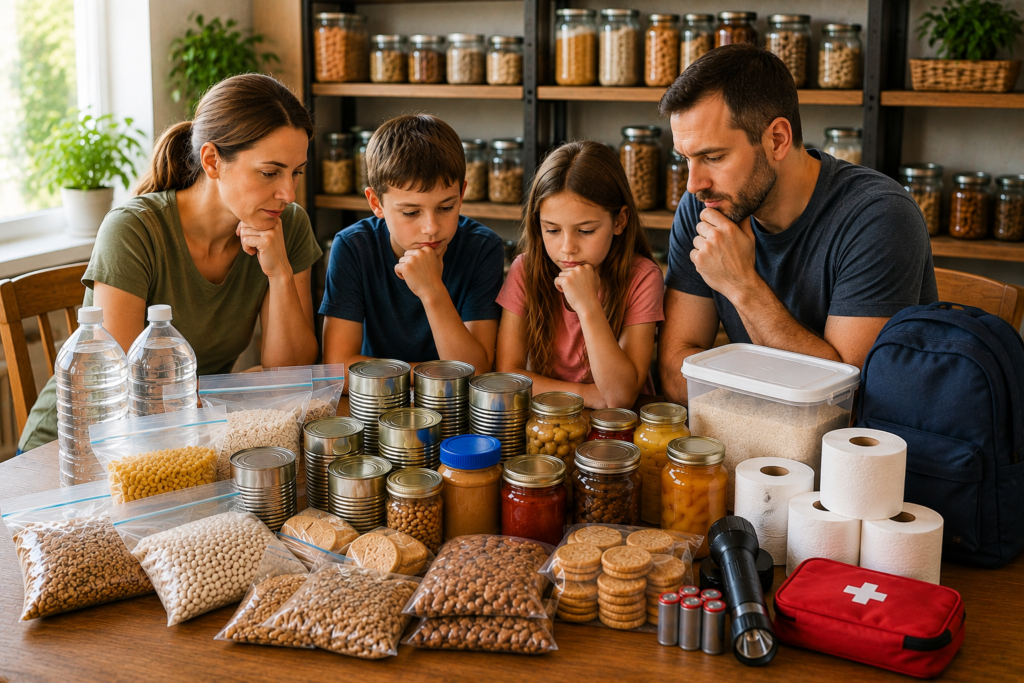
This is where having an emergency pantry becomes extremely valuable.
If your pantry contains shelf-stable foods, you don’t have to depend entirely on your refrigerator or freezer.
You may already have enough ingredients to create several meals without electricity.
Depending on your available cooking equipment, useful pantry foods can include:
- Canned beans
- Canned vegetables
- Canned fruit
- Canned meat
- Peanut butter
- Crackers
- Rice
- Pasta
- Oats
- Shelf-stable milk
- Dried fruit
- Nuts
- Ready-to-eat meals
- Shelf-stable sauces
You can combine these foods into simple meals rather than relying on complicated recipes.
For example, canned beans, canned vegetables and rice can become a basic meal. Peanut butter and crackers can provide a quick no-cook option. Oats, shelf-stable milk and dried fruit can make a simple breakfast.
The point isn’t to create gourmet meals.
The point is to have food you can actually use when your normal kitchen routine isn’t available.
What If You Can’t Cook?
A long power outage may also affect your ability to cook.
An electric stove, microwave, toaster oven or air fryer may be useless while the power is off.
That’s why emergency food planning should include at least some foods that can be eaten without cooking.
Think about keeping a combination of:
- Canned foods that can be eaten cold
- Crackers
- Peanut butter
- Nuts
- Dried fruit
- Ready-to-eat meats
- Shelf-stable beverages
- Granola or energy bars
If you use canned foods regularly, keep a manual can opener with your emergency supplies.
It’s a small item that can become extremely important when the power is unavailable.
Preparing Before the Next Outage
The best time to prepare for a power outage is before one happens.
You don’t need to turn your kitchen into a survival bunker. A few basic supplies can make a significant difference.
Keep Appliance Thermometers Available
A refrigerator and freezer thermometer can tell you much more than guessing based on how cold something feels.
Keep one in each appliance if practical, and make sure you know how to read it.
Have a Cooler Available
A quality cooler can provide temporary refrigerated storage when paired with sufficient ice or other appropriate cold sources.
If severe weather is approaching, know where your cooler is before the power goes out.
Keep Ice Supplies in Mind
If severe weather is approaching and an outage is possible, consider purchasing ice ahead of time if practical.
You can also freeze containers of water in advance. Besides providing a source of cold, frozen water can later become drinking water once safely thawed, provided the containers and water were clean and suitable for that purpose.
Maintain a Manual Can Opener
This deserves repeating.
If your emergency food supply contains canned goods, make sure you have a way to open them without electricity.
It’s a small item that’s easy to overlook until you need it.
Maintain a Shelf-Stable Backup
Your emergency pantry doesn’t need to be enormous.
Even a modest supply of foods that don’t require refrigeration can give you breathing room while you wait for the power to return.
The more of your meals that can be made without refrigerated ingredients, the less dependent you are on an appliance that’s currently not working.
Create a “Power-Outage Food Plan”

Instead of trying to figure everything out after the lights go out, create a simple plan now.
Write down:
1. Foods to Eat First
Identify the most perishable foods currently in your refrigerator.
Think about which foods are already nearing the end of their normal refrigerated storage period.
2. Foods to Protect
Decide which foods you’ll move to a cooler if the outage continues.
Don’t wait until the refrigerator has warmed significantly before deciding what you’ll do.
3. Foods You Can Eat Without Cooking
Make a list of shelf-stable foods your household actually likes.
Emergency food doesn’t have to be boring. Having familiar foods available can make an unexpected outage much easier to manage.
4. Cooking Alternatives
Identify any non-electric cooking equipment you already have and know how to use safely.
Don’t wait for an emergency to learn how your equipment works.
5. Water
Keep an adequate supply of drinking water available.
Remember that water may also be needed for food preparation, cleaning and other basic household needs.
6. Food Thermometers
Know where your refrigerator and freezer thermometers are located.
During an outage, you don’t want to waste time searching through drawers for them.
7. Emergency Pantry
Keep your shelf-stable foods organized so you aren’t searching through cabinets during an outage.
A simple system can make it easier to see what you have and what needs to be replaced.
Don’t Wait Until the Power Goes Out
A power outage is much easier to manage when you’ve already thought through the first 24–48 hours.
You don’t need to buy an entirely separate emergency food supply.
Start by looking at what you already have.
Ask yourself:
- Which foods require refrigeration?
- Which foods could become a meal without electricity?
- Which foods would we eat first?
- Do we have a manual can opener?
- Do we have a cooler?
- Do we have refrigerator and freezer thermometers?
- Do we have enough drinking water?
- Could we prepare several meals from our pantry without using refrigerated ingredients?
Answering those questions now can prevent confusion later.
And perhaps most importantly, remember that emergency food isn’t just about preparing for a major disaster.
It’s also about handling the ordinary disruptions that can happen without warning—winter storms, hurricanes, equipment failures, accidents and extended power outages.
A well-organized pantry gives you options when your normal routine suddenly stops.
Recommended Resource: The Lost Super Foods
If you’re building a long-term emergency food supply, it’s worth learning about the foods our grandparents and earlier generations relied on before modern refrigeration and grocery stores became common.
The Lost Super Foods is a guide that explores forgotten preservation methods, shelf-stable foods, and traditional survival recipes that helped families thrive during difficult times. The guide includes practical information on food storage, preservation techniques, and nutrient-dense foods that can complement a well-stocked emergency pantry.
Whether you’re just starting your preparedness journey or looking to expand your food storage knowledge, this resource may provide valuable insights for creating a more resilient pantry.
👉 Click here to learn more about The Lost Super Foods.
Final Thoughts
A power outage doesn’t have to mean losing your entire food supply.
The key is knowing what to do before, during, and after the outage.
Keep refrigerator and freezer doors closed. Monitor temperatures when possible. Prioritize vulnerable foods. Use your shelf-stable pantry strategically, and don’t take unnecessary risks with food that has been exposed to unsafe temperatures.
Most importantly, prepare before you need to.
A few simple supplies—a thermometer, cooler, manual can opener, stored water and shelf-stable foods—can make a significant difference when the electricity goes out.
Save this guide so you have it available the next time the power goes out.
Related Articles
How To Make Emergency Meals When You Can,t Use Your Stove
No-Cook Emergency Foods: The Best Foods You Can eat Without Electricity Or Cooking